What happens during a lumpectomy?
A lumpectomy removes the cancer along with a rim of the breast tissue around it, keeping as much of the rest of your breast as possible. The operation follows a set order, but not every patient has every step. What gets added depends on your diagnosis, what your scans show, and how much tissue needs to come out.
Breast-conserving surgery is the formal name. You will also hear it called a wide local excision, or simply a lumpectomy. They all mean the same operation.
The surgeon plans it around three things: where the cancer sits, how big it is compared with your breast, and whether it can be felt. That last point matters more than most people expect, and it decides what happens the day before.
Your plan is made before you get to theatre
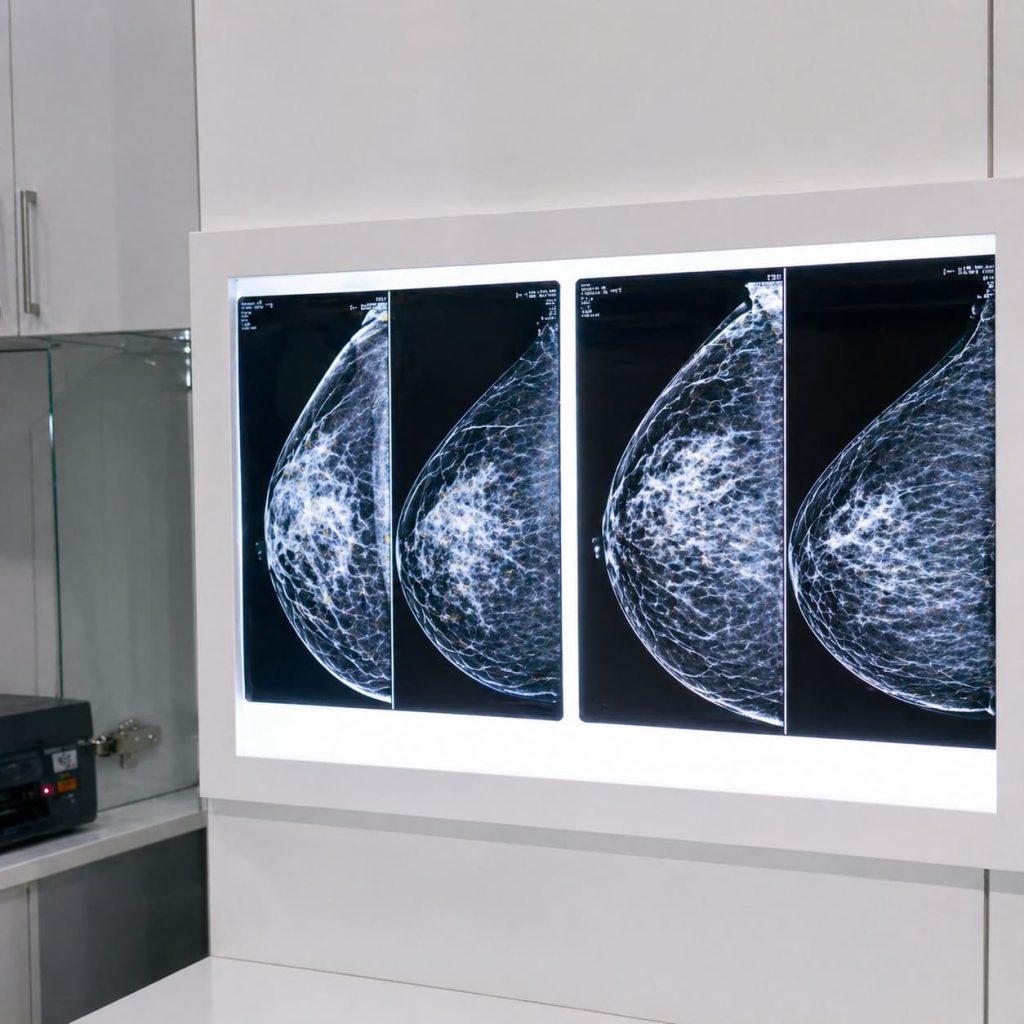
If the cancer can be felt, your surgeon can find it directly in theatre. If it only shows up on a mammogram or an ultrasound, it needs marking first so the right area comes out.
Mr Ghosh reviews the imaging and the diagnosis beforehand and sets out which parts of the operation apply to you, including whether your lymph nodes need assessing and whether the breast will need reshaping.
A marker guides the surgeon to what imaging can see
Localisation is a way of marking an abnormality that cannot be felt. Using a mammogram or an ultrasound for guidance, a radiologist places a fine wire, a small seed or another type of marker into the area that needs removing. It is a map for the operation, not a treatment in itself.
You have a local anaesthetic for this, and it usually takes around 30 to 45 minutes depending on which scan is used.
The timing differs by marker. A wire normally goes in on the morning of surgery, occasionally the afternoon before. A seed or magnetic marker can be placed days or even weeks ahead, which makes for an easier morning. Your breast unit will tell you which method they use and when.
Lymph node surgery is a separate decision
A sentinel lymph node biopsy removes the first one or two lymph nodes that drain the breast, so they can be tested. It shows whether an invasive cancer has reached the axilla, which is the group of lymph nodes under your arm.
NICE, which covers England, recommends this for invasive breast cancer when an ultrasound shows nothing in the lymph nodes, or when a needle biopsy of them comes back clear.
DCIS is different. Ductal carcinoma in situ is a non-invasive breast cancer, which means the cancer cells are still contained inside the milk ducts and have not spread into the surrounding breast. Because of that, a sentinel lymph node biopsy is not routine for DCIS treated with breast-conserving surgery. It is kept for the cases where there is a higher chance of invasive disease being found.
Check whether lymph node surgery is part of your operation when you go through your consent form.
Expert advice on breast cancer treatment, cosmetic breast surgery, and reconstruction options in London.
Book a ConsultationThe operation itself follows five steps
The order below is the backbone of a lumpectomy. How long each part takes, and how much is involved, varies with the cancer and the breast.
- Preparation. The theatre team runs through the surgical plan and the anaesthetic with you before you go to sleep.
- The incision. Your surgeon chooses where to cut for safe access to the cancer, and with the eventual scar in mind.
- Removing the tissue. The cancer comes out with a border of surrounding breast tissue around it.
- Sending the specimen. That tissue goes straight to the laboratory, where a pathologist inks the outside and checks how close the cancer came to each cut edge.
- Closing and reshaping. The breast is either closed directly or reshaped using the tissue that remains, depending on how much has been taken and from where.
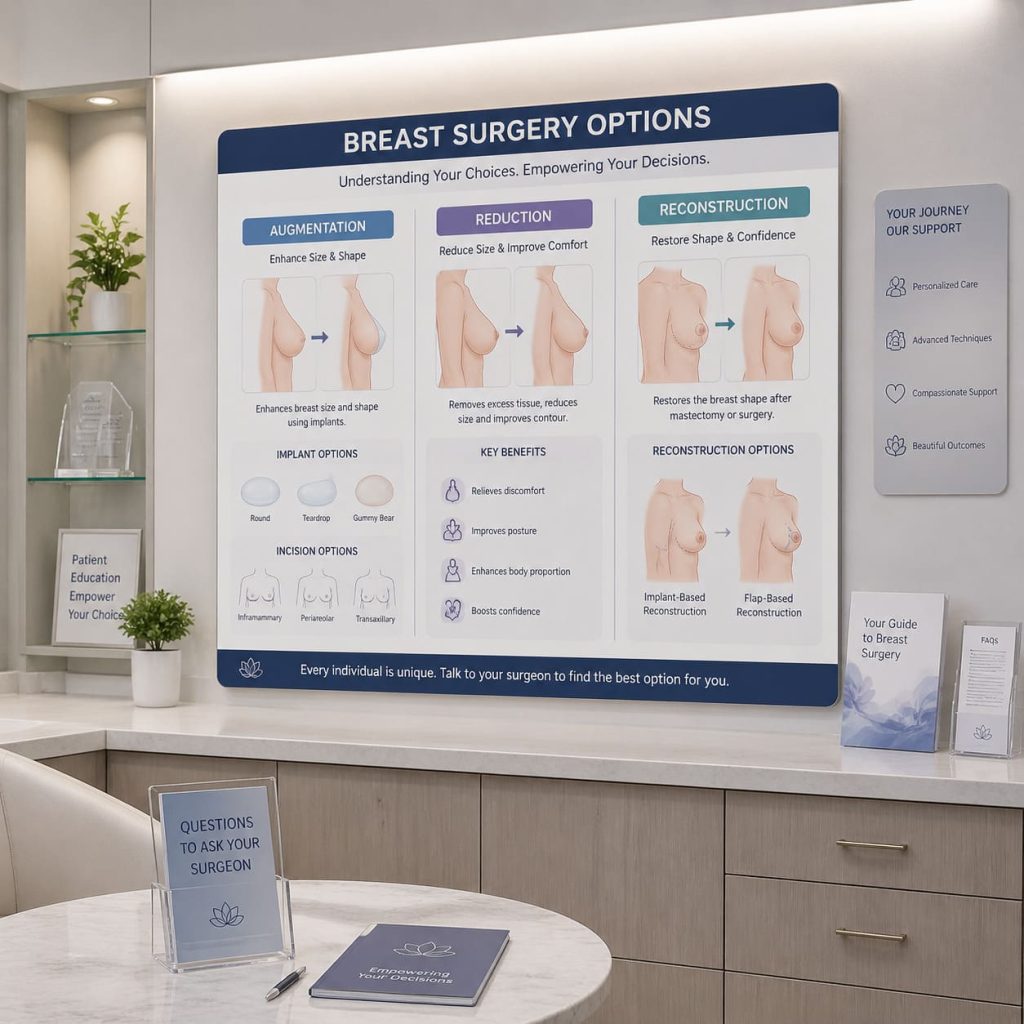
Reshaping is where a therapeutic mammoplasty comes in. It combines removing the cancer with a reduction-style reshaping, using the remaining breast tissue and skin to build a new shape. For smaller breasts, tissue borrowed from nearby can sometimes fill the gap instead. Mr Ghosh raises these before surgery when the amount coming out is likely to leave a dent or a difference in size between the two sides.
One thing the operation cannot settle is whether the cancer was fully cleared. That answer comes from the laboratory.

Ask whether your cancer can be felt or needs image-guided localisation. The answer decides whether you have a separate marking appointment, and when it happens.

Your results arrive about two weeks later
The pathologist examines the breast tissue, and any lymph nodes that were taken, under a microscope. A follow-up appointment usually happens one to two weeks after surgery, and that is where you get the findings.
Recovery. Your team will keep an eye on healing. The things that can happen afterwards include bleeding, infection, a build-up of fluid called a seroma, a collection of blood called a haematoma, nerve pain, numbness and a stiff shoulder. If lymph nodes were removed, swelling in the arm or hand is also possible, along with cording, which is tight bands of tissue running from the armpit down the arm.
The pathology. The report gives the margin, meaning the distance between the cancer and the outer cut edge of the tissue removed. If cancer cells reach that inked edge, it is recorded as tumour on ink, or a 0 mm margin. NICE recommends offering further surgery when that happens, and considering it when the cancer comes very close without touching, using different thresholds for invasive cancer and for DCIS.
Being called back for more surgery reflects what the microscope found. Cancer cells can extend past what any scan, or the surgeon’s eye and hand, can pick up during the operation.
What comes next. Radiotherapy is usual after breast-conserving surgery, though not automatic. Your team decides on that, and on any other treatment, once the final pathology is in.
The steps are the same for everyone. What differs is which ones you need, and that is worth having spelled out before the day.
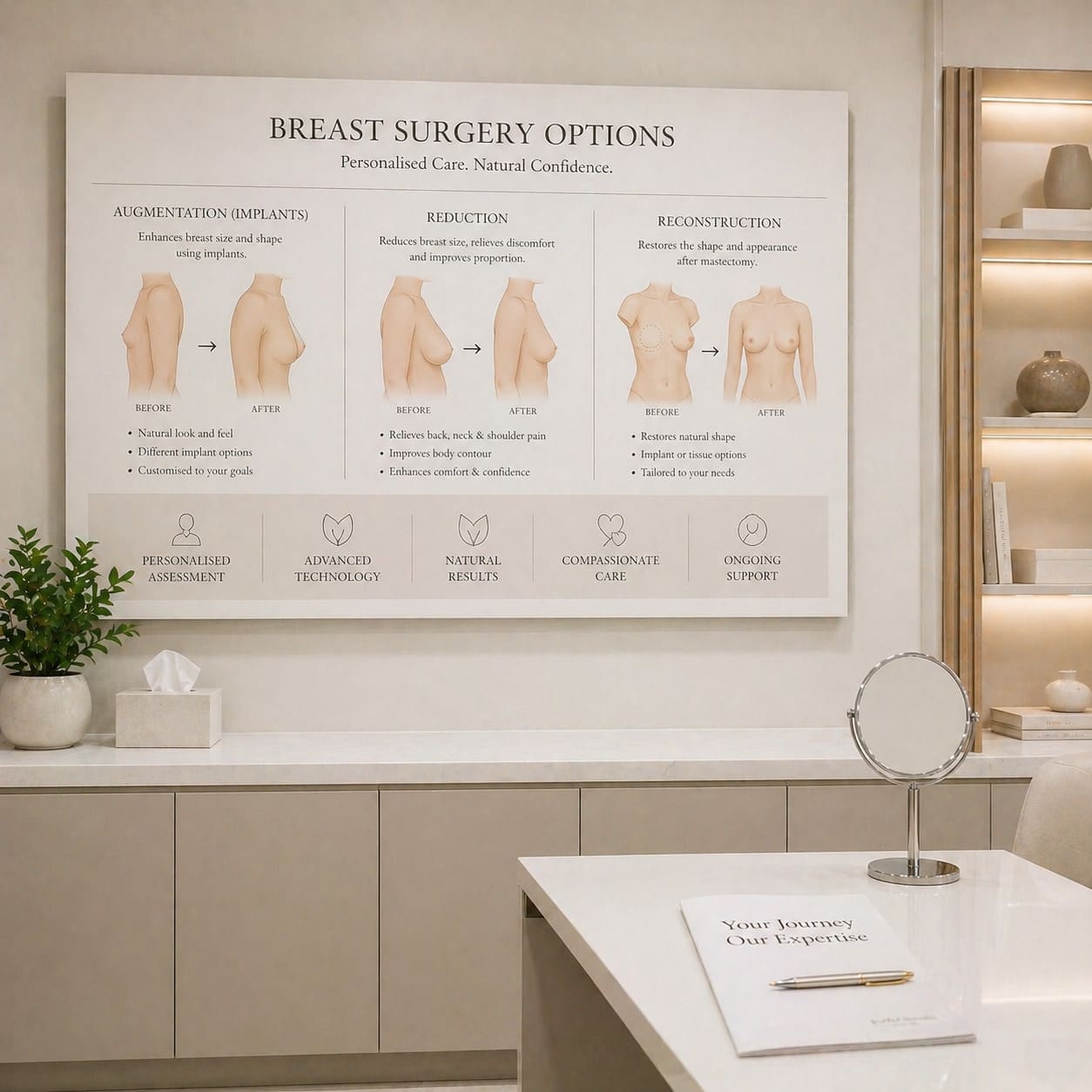
Ask how much tissue is coming out and where from, then ask what that will do to the shape of your breast. Reshaping is far easier to plan before the operation than to correct afterwards.

Common questions about lumpectomy surgery
Will I be awake during a lumpectomy?
Almost always no. A lumpectomy is normally done under general anaesthetic, so you are asleep for it. Your anaesthetist will confirm the plan with you beforehand and will tell you if anything different is proposed in your case.
Will I need a drain after a lumpectomy?
Usually not. Drains are more often needed when lymph nodes have been removed from the armpit as well. Your surgical team will tell you in advance if one is planned.
How long will I wait for lumpectomy results?
Usually one to two weeks. That appointment covers how the wound is healing, what the pathology showed, and what treatment comes next.
Does a close margin always mean another operation?
No. It depends on the type of cancer and how close the cells came to the edge. NICE uses one threshold for invasive cancer and a wider one for DCIS, and the team weighs that against the rest of your treatment.
Will my breast look different after a lumpectomy?
It can, depending on where the cancer sits, how much tissue comes out and the size of your breast. Direct closure, reshaping or a therapeutic mammoplasty are all options, and which one suits you should be discussed before surgery rather than after.
This is general information, not medical advice.
Reviewed by Mr D. B. Ghosh, Consultant Breast Surgeon, dual European Board certified (FEBS) in Breast Surgery and Surgical Oncology, and Board Certified in Cosmetic Breast Surgery through the Royal College of Surgeons scheme. GMC 4657664.
Expert breast surgery advice from a leading London consultant with over 30 years of experience.
Book Consultation