

Risk Reducing Surgery for BRCA Carriers
If you carry a BRCA1 or BRCA2 gene variant, your lifetime breast cancer risk may be 60% to 72%. Risk-reducing mastectomy is one of the most effective ways to lower that risk. Mr Ghosh plans and performs both your mastectomy and reconstruction as a single coordinated operation at The London Clinic, so your long-term outcome is considered from the start.
- Reduces breast cancer risk by 89% to 95%
- Mastectomy and reconstruction planned together by one consultant
- Dual European Board certified in breast surgery and surgical oncology
- Available through NHS and private pathways
Find the Information You Need
Use the links below to go straight to the topic that matters most to you. Each section covers a different part of the risk reducing pathway.
The Hardest Part Is Not the Surgery
Knowing you carry a BRCA1 or BRCA2 gene variant changes how you think about your body. You may have watched a mother, sister, or aunt go through breast cancer treatment. You may have been told your own risk is high. And now you are sitting with a question that no amount of reading can fully answer: should I have surgery to remove healthy breast tissue before cancer develops?
That question is not a medical one alone. It involves your age, your plans for your family, how you feel about your body, and what kind of risk you are willing to live with. Some patients know from the moment they receive their genetic test result that surgery is the right path. Others take months or years to decide. Both approaches are reasonable, and neither is wrong.
What matters is that you make your decision with the right information, from someone who does this work regularly and will answer your questions without pressure. This page covers the clinical evidence, the surgical options, the alternatives, and the pathway from consultation to recovery, so you can arrive at your appointment already informed and ready to ask the questions that matter most to you.
What a BRCA Variant Means for Your Breast Cancer Risk
BRCA1 and BRCA2 are genes that help repair damaged DNA in your cells. When either gene carries a harmful variant (sometimes called a pathogenic mutation), this repair function is impaired, and the risk of developing breast cancer rises substantially.
Women who carry a BRCA1 variant have an estimated lifetime breast cancer risk of 65% to 72%. For BRCA2 carriers, the figure is similar, estimated at 61% to 69%. By comparison, the general population risk is approximately 13%. These figures come from large prospective studies and are cited by both NICE and Cancer Research UK. BRCA1 carriers face peak breast cancer incidence between ages 41 and 50, while BRCA2 carriers face peak incidence between 51 and 60.
Risk-reducing bilateral mastectomy lowers breast cancer risk by 89% to 95% in women with a confirmed pathogenic variant. A 2025 international study of over 5,000 BRCA carriers found that bilateral mastectomy was associated with a 36% lower mortality risk, and risk-reducing salpingo-oophorectomy with a 42% lower mortality risk. These are significant figures, but it is important to be clear: risk-reducing mastectomy does not eliminate risk entirely. A small amount of breast tissue may remain after surgery, and long-term breast awareness remains important.
For a more detailed explanation of how BRCA1 and BRCA2 differ and how variants are inherited, read our guide to BRCA1 vs BRCA2.
Not Everyone with a BRCA Variant Needs Surgery
Risk-reducing mastectomy is a significant decision. It is most often discussed in specific clinical situations, and it is not appropriate for everyone who carries a gene variant.
When Risk-Reducing Mastectomy Is Most Often Considered
You have a confirmed pathogenic variant in BRCA1, BRCA2, TP53, or PALB2, identified through an accredited genetics service. You are considered at high risk based on family history where genetic testing has confirmed elevated risk. You have completed childbearing and breastfeeding, or have made an informed decision about fertility before proceeding. You have received genetic counselling and, where appropriate, psychological support to help you think through the decision.
When Surgery May Not Be the Right Path
Patients at moderate risk without a confirmed high-penetrance gene variant may be better served by enhanced surveillance. If you have not yet had genetic counselling, this is an important first step before any surgical discussion. NICE guidelines are clear that risk-reducing surgery should not be offered to patients with comorbidities that would significantly increase surgical risk. And for some patients, the right choice is to continue with surveillance and revisit the question later. There is no deadline.
Mr Ghosh can discuss whether risk-reducing surgery is appropriate during a consultation. If genetic counselling has not yet taken place, he can arrange a referral.
Surgery Is One Option. It Is Not the Only One.
Risk-reducing mastectomy is the most effective way to lower breast cancer risk in BRCA carriers, but it is not the only option. Some patients choose a different path, and some combine approaches. Understanding all three helps you make an informed decision.
Enhanced surveillance means regular screening with annual breast MRI and mammography, typically starting from age 25 to 30. It does not reduce breast cancer risk, but it improves the chances of catching cancer early, when it is most treatable. For some patients, surveillance is a long-term strategy. For others, it bridges the gap while they decide about surgery.
Chemoprevention uses medication to lower breast cancer risk. NICE recommends discussing tamoxifen (for premenopausal women) or anastrozole (for postmenopausal women), taken for five years. These medications reduce breast cancer risk by approximately 30% to 40%. They are not suitable for everyone, and side effects should be discussed with your specialist.
Risk-reducing salpingo-oophorectomy removes the ovaries and fallopian tubes. It reduces ovarian cancer risk by approximately 80% and may also reduce breast cancer risk, though the evidence on the breast cancer reduction is mixed. NICE guidelines recommend deferring this surgery until after childbearing is complete. Mr Ghosh coordinates with gynaecological colleagues where both breast and ovarian risk reduction are being considered.
Each option has trade-offs. Some patients choose surveillance for years before moving to surgery. Some never choose surgery. Some patients know from the first consultation that surgery is right for them. All are valid, and none should be rushed.
Book a Consultation
If you carry a BRCA variant and want to understand your options, we can discuss what is most appropriate for your situation during a consultation. There is no obligation and no pressure. This is a decision that belongs to you.
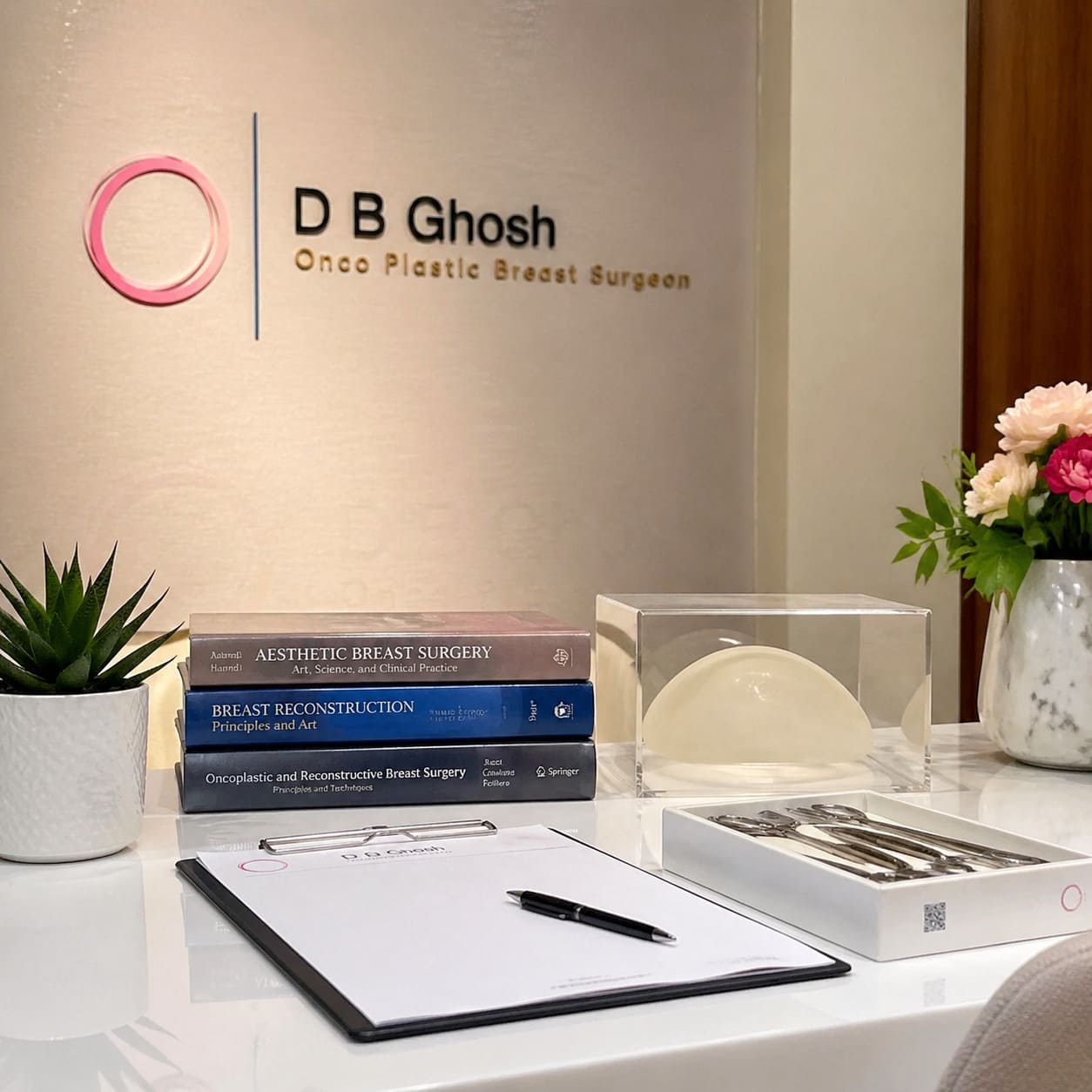
Risk-Reducing Mastectomy Is Planned Around You
There are several types of mastectomy used in risk-reducing surgery, and the right one depends on your anatomy, your risk profile, and your preferences.
Nipple-sparing mastectomy
This removes the breast tissue while preserving the skin and nipple. Published evidence shows this approach is oncologically safe for BRCA carriers, with low rates of subsequent breast cancer and high patient satisfaction. It allows the most natural-looking result after reconstruction and is increasingly offered for risk-reducing procedures.
Total mastectomy
Total mastectomy removes all breast tissue and the nipple. It provides slightly greater risk reduction and may be recommended in specific clinical situations.
Skin-sparing mastectomy
Skin-sparing mastectomy preserves the breast skin but removes the nipple. It is used when nipple preservation is not suitable based on anatomy or risk factors.
Breast Reconsutrction
Reconstruction is planned alongside your mastectomy, not afterwards. Options include implant-based reconstruction (direct-to-implant or two-stage expander) and tissue-based methods such as DIEP flap (abdominal tissue) or latissimus dorsi flap (back tissue). Mr Ghosh's microsurgical training in DIEP flap breast reconstruction means the full range of options is available to you within a single surgical team. In our practice, we find that patients who understand the reconstruction options before surgery feel more confident in their decision. We discuss this at your first consultation, not as an afterthought.
From First Consultation to Recovery
Step 1: Consultation with Mr Ghosh
You meet the consultant who will plan and perform your surgery. He reviews your genetic test results, discusses your individual risk, and explains the surgical options. If genetic counselling has not yet taken place, he can refer you to a clinical genetics service.
Step 2: Reconstruction planning.
Your mastectomy and reconstruction are planned together. Mr Ghosh discusses which approach suits your anatomy and preferences, and explains what to expect from each option. You have time to ask questions and, if you wish, to take the information away and think before deciding.
Step 3: MDT review.
Your case is reviewed by a multidisciplinary team of specialist radiologists, oncologists, and pathologists. Mr Ghosh co-chairs the MDT at Harley Street Clinic, where national and international cases are discussed.
Step 4: Pre-operative assessment.
Standard health checks and any required imaging are completed before surgery. You receive a clear timeline so you know exactly what to expect.
Step 5: Surgery at The London Clinic
Mr Ghosh performs your risk-reducing mastectomy and immediate reconstruction in a single operation. Hospital stay is typically 1 to 3 nights depending on the type of reconstruction.
Step 6: Recovery and follow-up.
Most patients return to light daily activities within 2 to 4 weeks. Full recovery typically takes 4 to 6 weeks, though this varies depending on the reconstruction method. Follow-up appointments are with Mr Ghosh directly.
What Sets Our Risk-Reducing Surgery Service Apart
One Consultant for Mastectomy and Reconstruction
Mr Ghosh plans and performs both your risk-reducing mastectomy and your reconstruction. Your surgical plan is coordinated by one specialist. There is no referral to a separate plastic surgeon, no handoff, and no risk of conflicting approaches.
Dual European Board Certification
Mr Ghosh holds the Fellowship of the European Board of Surgery (FEBS) in both breast surgery and surgical oncology. This distinctive qualification reflects formal, examination-based assessment in cancer management and breast surgical technique, held by a small number of breast surgeons in the UK.
Microsurgical Reconstruction Expertise
DIEP flap and other tissue-based reconstruction methods require microsurgical training. Mr Ghosh’s experience in these techniques means patients considering risk-reducing surgery have access to the full range of reconstruction options within a single surgical team.
NICE Expert Adviser in Breast Surgery
Mr Ghosh advises NICE, the body that sets clinical standards for the NHS, as an expert in breast surgery. This signals peer recognition at national level for surgical expertise and clinical judgement.


Rated 4.96 out of 5 from 98 Verified Patient Reviews on Doctify
Mr Ghosh provides exceptional medical care, fostering trust and personalised attention that reassures both patients and their families alike.
Mr Debashis Ghosh is a Consultant Oncoplastic Breast Surgeon at The London Clinic on Harley Street. He holds dual Fellowship of the European Board of Surgery (FEBS) in breast surgery and surgical oncology, and he currently serves as Divisional Director of Surgery at The London Clinic. Within the NHS, he has served as Clinical Lead for Breast Services at the Royal Free Hospital and Clinical Director for Breast Pathways at the NCL Cancer Alliance.
His practice spans breast cancer surgery, oncoplastic reconstruction, and microsurgical techniques including DIEP flap reconstruction. He also serves as a NICE expert adviser in breast surgery. For patients considering risk-reducing surgery, his combined expertise in both cancer surgery and reconstruction means both elements are planned and performed by the same consultant, avoiding the fragmented approach that can occur when mastectomy and reconstruction are managed by separate teams.
Patients describe Mr Ghosh as calm, thorough, and honest. He takes time to explain every option, answers questions without rushing, and supports patients through what is often one of the most significant decisions of their lives. Whether your situation is straightforward or complex, Mr Ghosh and the team provide specialist care with a personal approach at every stage.
- Dual European Board certified (FEBS) in breast surgery and surgical oncology
- NICE expert adviser in breast surgery
- Divisional Director of Surgery, The London Clinic
- Trained in DIEP flap, implant-based, and microsurgical reconstruction techniques
- RCS England Board Certification in Cosmetic Breast Surgery.
Where to Find Us in London
Local London Clinics
Breast reconstruction consultations and surgery take place at leading London hospitals with fast access to imaging, theatres and specialist nursing.
Posted onTrustindex verifies that the original source of the review is Google. I am so happy I chose Mr Debashis Ghosh and his team. I had cosmetic breast surgery and it is everything and more than I wanted. I trusted him completely and I am so thankful I did. The entire staff are lovely and make you feel comfortable and confident. If I could give more than 5 stars I would.Posted onTrustindex verifies that the original source of the review is Google. Dr Ghosh changed my confidence completely. He listens very well and makes you feel supported. I had breast reconstruction and the recovery went very well. He helps you reach realistic goals and the results have been life changing.Posted onTrustindex verifies that the original source of the review is Google. I recently visited Dr Ghosh for a consultation regarding cosmetic breast surgery and I couldn’t be happier. He took the time to understand my goals and explained what was realistically achievable. A few weeks on I am thrilled with how everything looks.Posted onTrustindex verifies that the original source of the review is Google. Visited Dr Ghosh for breast care and he was absolutely amazing. Very thorough and helpful in deciding the right option for me. I would recommend him to anyone considering breast surgery.Posted onTrustindex verifies that the original source of the review is Google. Amazing doctor and amazing staff.Posted onTrustindex verifies that the original source of the review is Google. I love love love this clinic and Dr Ghosh. I felt very welcomed the moment I walked in. Dr Ghosh made me feel comfortable and explained my breast surgery clearly.Posted onTrustindex verifies that the original source of the review is Google. From the moment I walked in the staff made me feel comfortable and welcome. Dr Ghosh was kind patient and took time to answer all of my questions without making me feel rushed. The nurse and coordinator were also very helpful. The whole experience was smooth supportive and professional from start to finish.Posted onTrustindex verifies that the original source of the review is Google. Great service at the Harley Street clinic. The staff are friendly knowledgeable and scheduling appointments was easy.Posted onTrustindex verifies that the original source of the review is Google. I had a very positive experience at this clinic. Everything was explained clearly and I felt well looked after throughout my appointments.Posted onTrustindex verifies that the original source of the review is Google. Dr Ghosh and his team provided an incredible experience from start to finish. During the consultation he truly listened to my concerns and goals and provided honest recommendations. Surgery and follow up care were well organised and supportive. I couldn’t be happier with my decision.
Frequently Asked Questions About Risk-Reducing Surgery for BRCA Carriers
We have answered the questions patients ask most often. If your question is not covered here, please get in touch and we will be happy to help.
How much does risk-reducing mastectomy reduce breast cancer risk?
Bilateral risk-reducing mastectomy lowers breast cancer risk by 89% to 95% in women with a confirmed BRCA1 or BRCA2 pathogenic variant. It is the most effective risk-reduction option currently available. However, a small amount of breast tissue may remain after surgery, which means the risk is not reduced to zero. Long-term breast awareness remains important. Mr Ghosh will set clear, honest expectations during your consultation based on your specific situation.
When is the right time for risk-reducing mastectomy?
There is no single right time. NICE guidelines recommend discussing risk-reducing surgery with all confirmed BRCA1, BRCA2, and TP53 carriers, but the decision about timing is personal. Many patients consider surgery after completing childbearing, often in their late 20s to early 40s. BRCA1 carriers face peak breast cancer incidence between ages 41 and 50, while for BRCA2 carriers the peak falls between 51 and 60. Mr Ghosh can discuss the timing that makes sense for your individual situation.
Can I have breast reconstruction at the same time as risk-reducing mastectomy?
Yes. Immediate reconstruction is performed during the same operation as the mastectomy, so you wake from surgery with a breast shape already in place. Options include implant-based reconstruction and tissue-based methods such as DIEP flap. Mr Ghosh plans both procedures together from your first consultation. Delayed reconstruction, performed as a separate operation at a later date, is also available if you prefer.
Is nipple-sparing mastectomy safe for BRCA carriers?
Published evidence shows that nipple-sparing mastectomy is oncologically safe for BRCA carriers, with low rates of subsequent breast cancer and high patient satisfaction. It preserves the skin and nipple, allowing the most natural appearance after reconstruction. It is not suitable for everyone, and suitability depends on factors including breast size, anatomy, and individual risk profile. Mr Ghosh will assess whether this approach is appropriate for you.
What if I am not ready for surgery?
Risk-reducing surgery is a deeply personal decision, and there is no urgency to decide immediately. Enhanced surveillance with annual breast MRI and mammography is a recognised alternative. Chemoprevention with tamoxifen or anastrozole is another option. You can discuss all pathways during your consultation and take the time you need. For more information on what BRCA genes are and how variants are identified, read our guide to [the BRCA gene](/blog/what-is-the-brca-gene/).
Do I need a GP referral to see Mr Ghosh?
No. Private patients can self-refer for a consultation. Referrals are also accepted from GPs, genetic counsellors, and hospital consultants. For NHS care at the Royal Free Hospital, a referral from your GP or genetics service is usually required.
Still have questions? Let’s discuss!





Book a Consultation to Discuss Risk-Reducing Surgery
If you carry a BRCA1 or BRCA2 gene variant and want to understand your surgical options, Mr Ghosh will explain what is appropriate for your situation, what the surgery involves, and what to expect afterwards. There is no pressure and no obligation. A member of the team will be in touch to arrange your appointment.
By submitting the form below, you agree to be contacted regarding your enquiry.