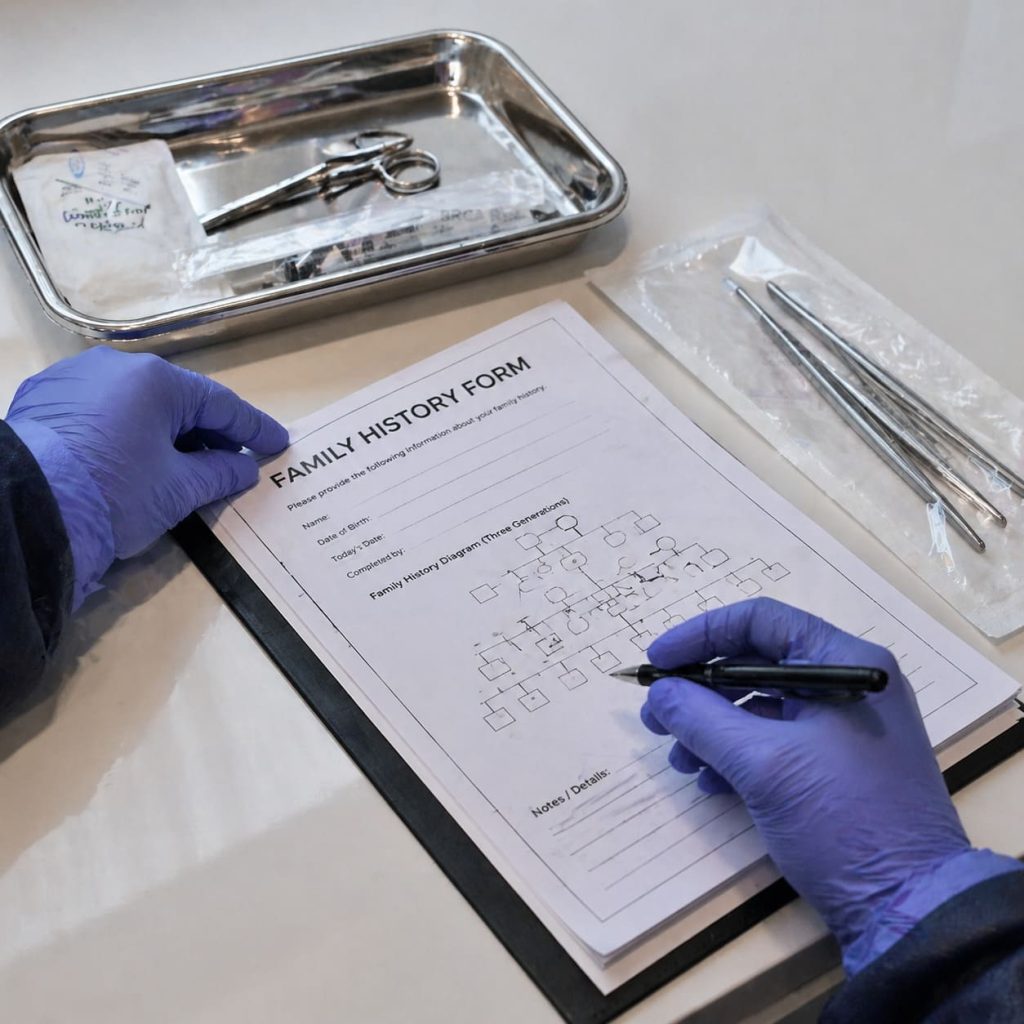
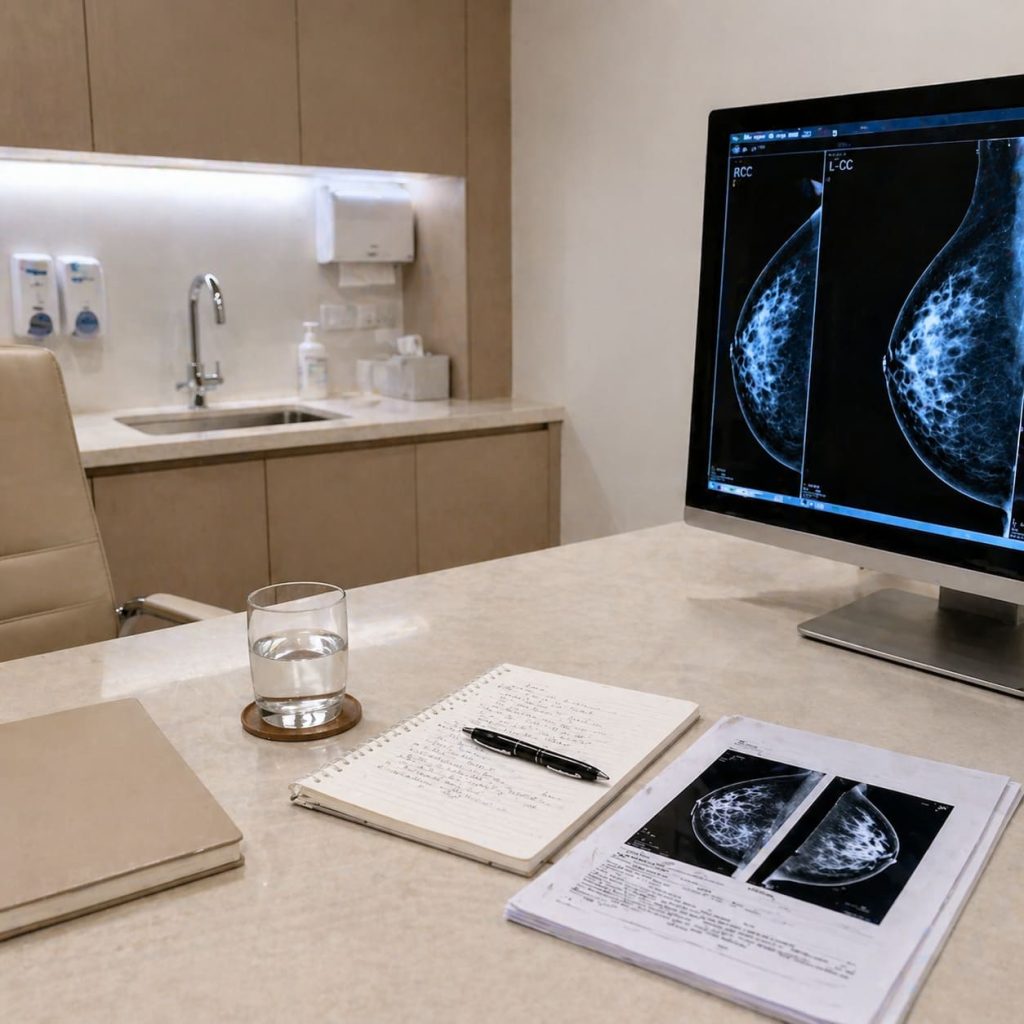
Does a mammogram recall mean cancer?
No. A mammogram recall means the screening team needs more information before reaching a diagnosis. In the latest NHS England Digital data for 2024-25, 73.7% of women referred after an abnormal screening result had no cancer confirmed.
A breast assessment clinic forms the second stage of the NHS Breast Screening Programme. At the appointment, the assessment team investigates an image that needs clarification. An assessment appointment soon after your screening mammogram follows the programme timetable. It does not show how concerning the finding is.
Technical recall and assessment recall
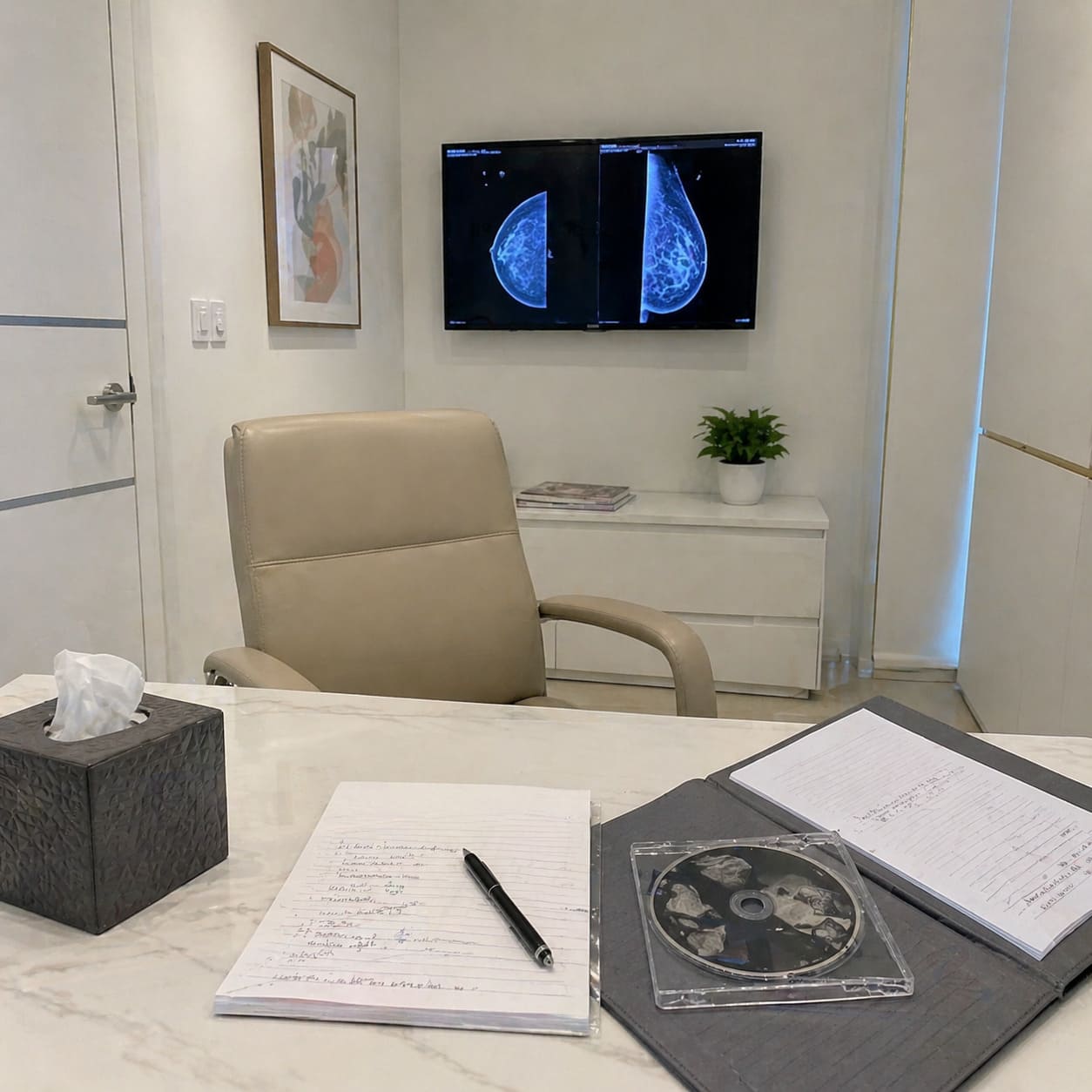
A technical recall repeats images that were unclear. An assessment recall investigates a possible finding on the mammogram.
| Recall type | Why it happens | What may happen at the appointment |
|---|---|---|
| Technical recall | The original mammogram images were not clear enough to interpret. | The team repeats the mammogram images to obtain a clear screening result. |
| Assessment recall | An area on the mammogram needs targeted investigation. | The team may take further images, use ultrasound or arrange a biopsy if imaging needs a tissue answer. |
A first screening mammogram leads to recall more often than later screens because the team has no earlier screening images for comparison. The letter or screening unit can confirm which route applies to you.
Expert advice on breast cancer treatment, cosmetic breast surgery, and reconstruction options in London.
Book a ConsultationWhat to expect at a breast screening assessment clinic
Your original mammogram finding determines which tests you have during a breast screening assessment. Triple assessment means further imaging, an examination and needle sampling when the images require a tissue answer.
Possible findings include calcifications, which are small calcium deposits, a mass, an area that looks denser on one side, or architectural distortion, where the normal breast tissue pattern looks pulled out of shape. A diagnosis requires the assessment findings and, where needed, tissue sampling.
The usual order is:
- Further mammogram images may include magnification or focused views. These images show whether the area remains visible and clarify its shape or pattern.
- An examination may follow where the clinical team needs to assess the breast directly.
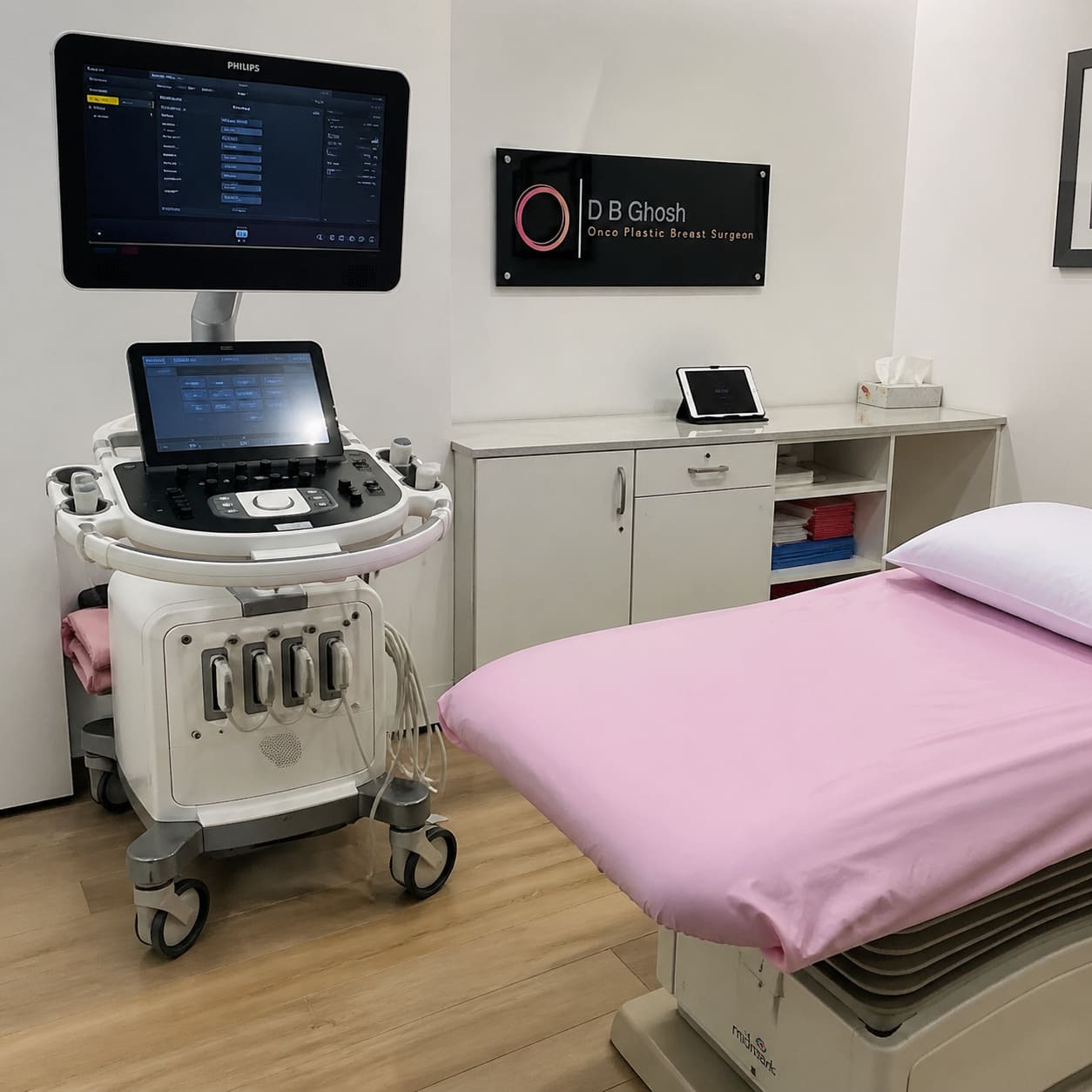
- Ultrasound uses sound waves to examine breast tissue. It is common in assessment, especially where the original image showed a soft-tissue density, although some recalls do not need it.
- A needle biopsy may follow if imaging still leaves an unanswered question. A core biopsy removes small tissue samples, while a vacuum-assisted biopsy uses suction to collect tissue through a needle.
A biopsy can confirm a benign result as well as identify cancer. In 2024-25, 52.0% of women referred for assessment had needle sampling. Biopsy is therefore a regular part of clarification without predicting an individual outcome.
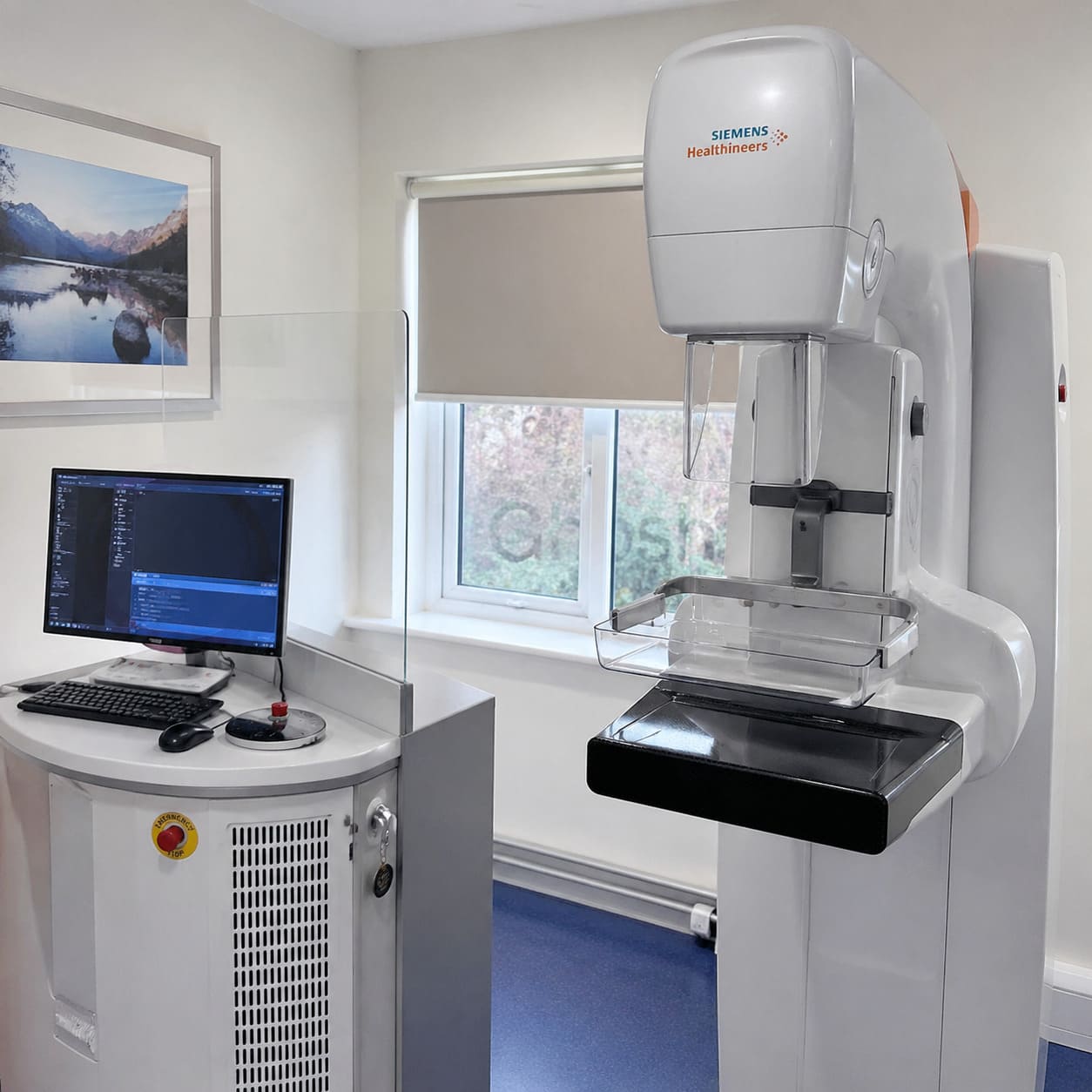
Take your recall letter to the appointment and ask whether it describes a technical recall or an assessment recall. The distinction explains whether the team is repeating unclear images or investigating a possible finding.

Same-day results depend on the tests
Imaging-only assessments may reach an outcome on the day. A biopsy creates a separate stage because a laboratory must examine the tissue sample before the team can discuss a complete result.
Imaging may settle the recall on the day
Additional mammogram images or ultrasound may show that the original area needs no biopsy. When imaging settles the question, the assessment team may discuss your outcome on the day, subject to local arrangements.
Some women return to routine screening after this assessment. Others need tissue sampling because the images require a firmer answer.
Biopsy results take longer
Pathology examines the tissue taken during a biopsy. The laboratory report may take a week or more after the biopsy, and local arrangements affect when you receive the result.
The tissue result must also match the original images and any examination finding. The assessment team must review imaging, examination and pathology together after a needle biopsy, as NHS England requires. A further biopsy may be needed where the tissue result does not explain the image.
Assessment can lead to a return to routine screening, further diagnostic sampling, treatment planning or exceptional short-term recall. Short-term recall means an earlier repeat assessment where the first assessment has not given a definite answer.
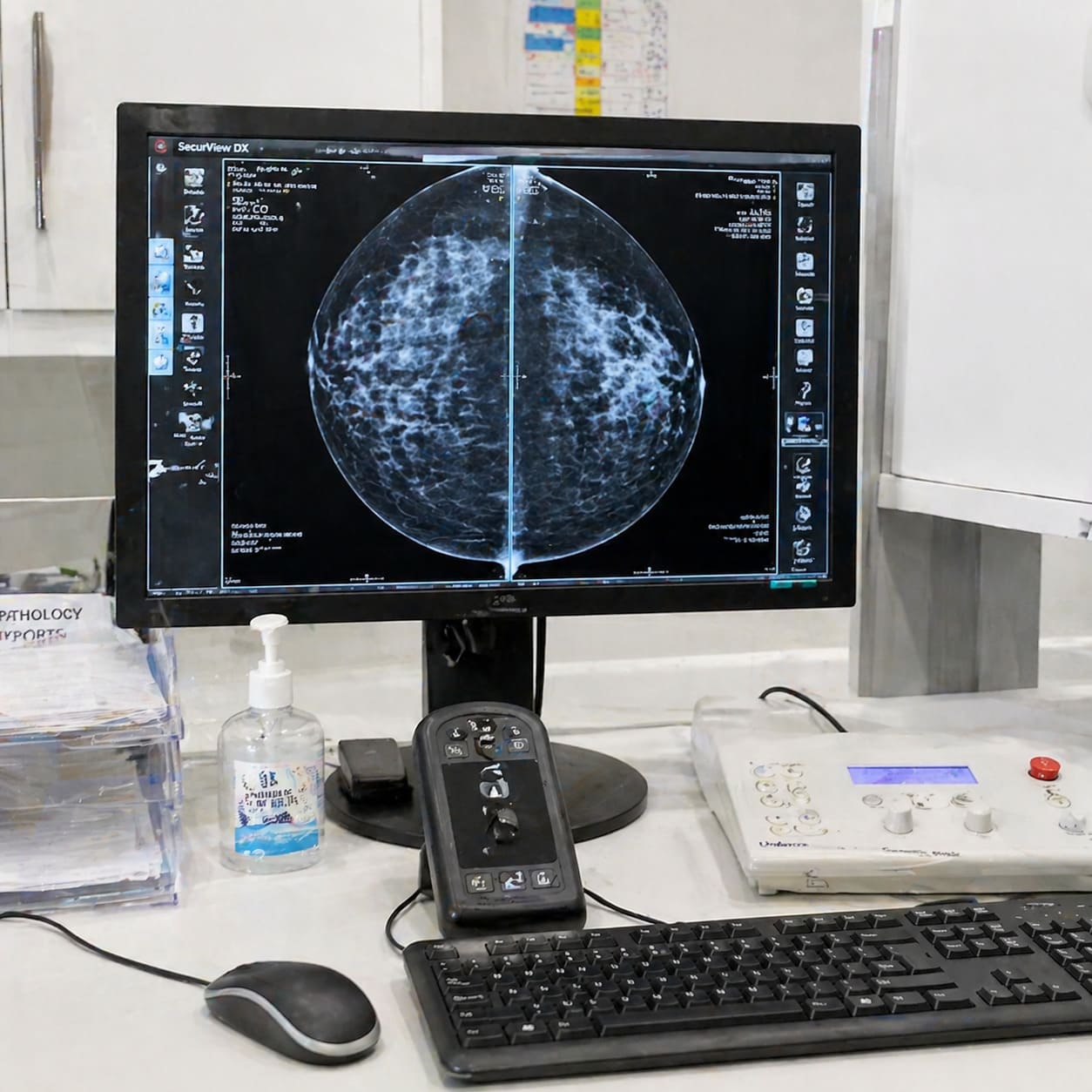
If you have a biopsy, ask whether the tissue result explains the mammogram finding. Imaging and pathology should be reviewed together before the outcome is agreed.

Priorities after a screening recall
The letter begins a process that needs a clear clinical explanation. The screening service normally remains the right route for an NHS screening recall. It coordinates the assessment needed to resolve the original mammogram finding.
Useful questions at your appointment include:
- What did the original mammogram show? Ask whether the concern was calcifications, a density, distortion or another image feature.
- Which images or scans clarified the area, and what did they show?
- If a biopsy was taken, does the tissue result explain the mammogram finding? This checks that imaging and pathology agree.
- What outcome has the team agreed, and does it involve routine screening, further sampling or treatment?
A consultant-led review can be useful when imaging remains unclear, a biopsy result needs further explanation, or further diagnostic sampling is under discussion. Mr Ghosh can review your available imaging and pathology, then explain the reason for any proposed further investigation or treatment. The assessment should account for the original mammogram and every result that followed.
Expert breast surgery advice from a leading London consultant with over 30 years of experience.
Book ConsultationCommon questions about mammogram recall
Why was I called back after my first mammogram?
First screening mammograms lead to recall more often than later screens because the screening team has no earlier images for comparison. A recall still requires assessment before any diagnosis is made.
Will I definitely have an ultrasound after a mammogram recall?
No. Ultrasound is used in most assessment cases, but the tests depend on the type and location of the mammogram finding. Some recalls are resolved with further mammogram images alone.
Does a breast biopsy mean cancer is likely?
No. A biopsy provides a tissue answer when imaging needs clarification. It can confirm that a finding is benign.
Why was my appointment offered so quickly?
The NHS Breast Screening Programme aims to offer an assessment appointment within three weeks of the screening mammogram. A prompt appointment follows the screening pathway and does not indicate an individual diagnosis.
Can a normal screening mammogram rule out breast cancer completely?
A normal screening mammogram provides reassurance from that screening episode. Any new breast change still needs clinical assessment.
This is general information, not medical advice.
Reviewed by Mr D. B. Ghosh, Consultant Breast Surgeon, dual European Board certified (FEBS) in Breast Surgery and Surgical Oncology, and Board Certified in Cosmetic Breast Surgery through the Royal College of Surgeons scheme. GMC 4657664.