
Is breast lump removal in London worthwhile for a benign lump?
Breast lump removal in London is worthwhile when a confirmed benign lump is growing, causes persistent symptoms, or leaves a genuine diagnostic concern. Many securely diagnosed lumps can remain in place. A clinician first examines your breast and reviews scans and any tissue sample to check that all three support the same benign diagnosis.
A new or unexplained breast lump needs assessment before anyone treats it as benign. NICE, which covers England, recommends a suspected cancer pathway referral for an unexplained breast lump, with or without pain, in people aged 30 and over. People under 30 may need a non-urgent referral, with earlier review where clinical concern is higher.
You can see your GP or arrange a private consultation directly. A core needle biopsy takes a small tissue sample when examination and imaging do not provide enough certainty.
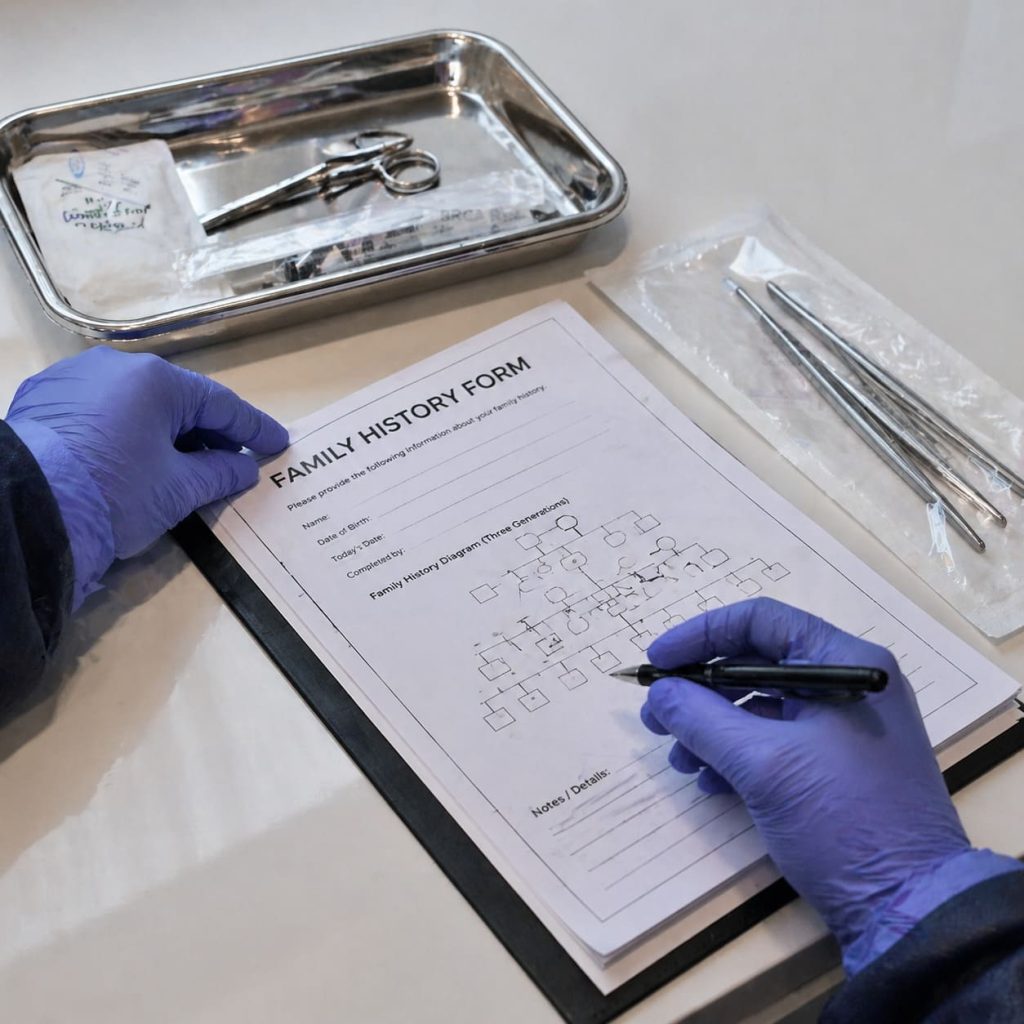
Clinical, imaging and pathology concordance means that the examination, scan and tissue result all tell the same benign story. That agreement makes observation a sound option. Growth, symptoms, or uncertainty can make removal proportionate.
Your securely benign lump can often remain in place
If your fibroadenoma has been confidently diagnosed, it often needs neither treatment nor routine follow-up. A fibroadenoma is a non-cancerous solid breast lump that may feel smooth and move beneath the skin, although examination alone cannot confirm the diagnosis.
The Association of Breast Surgery advises discharge when examination, imaging and pathology agree that a fibroadenoma is benign. Size alone does not set one universal rule for surgery. The reason for removal needs to be clear.
A simple breast cyst follows a different path. A cyst contains fluid and may feel soft or firm. When a simple cyst becomes large or uncomfortable, a specialist may drain the fluid with a fine needle and syringe, sometimes using ultrasound guidance.
Drainage often makes the cyst disappear. A cyst can return, and new cysts can form, so a fresh change still needs review.
Expert advice on breast cancer treatment, cosmetic breast surgery, and reconstruction options in London.
Book a ConsultationReasons to consider excision: growth, uncertainty and persistent symptoms
A benign biopsy result can lead to removal when the whole clinical picture leaves a specific problem to solve. The decision rests on what the lump is doing, what the tests show, and what removal would achieve.
Rapid growth calls for reassessment. It can support removal of a fibroadenoma even after a biopsy has shown benign tissue. Growth gives the surgeon a reason to review the diagnosis and the best method of treatment.
Persistent pain or discomfort can also justify a discussion about surgery. Fibroadenoma removal does not guarantee pain relief, particularly where breast pain has more than one cause. The likely benefit needs to outweigh the effect of an operation.
A cellular fibroepithelial lesion is a tissue finding that can resemble a phyllodes tumour on a core needle biopsy. A phyllodes tumour is a different type of breast growth. Surgical removal may give the laboratory enough tissue to reach a clearer diagnosis.
Take copies of your imaging and biopsy reports to your consultation. Comparing the examination, scan and tissue findings helps establish whether the diagnosis is securely benign.

Match the removal method to the lump and trade-off
The diagnosis guides the procedure. Access to vacuum-assisted excision varies between London services, and suitability depends on the lump’s size, position, visibility on imaging and pathology result.
This comparison shows the different purposes of observation, drainage and removal.
| Option | Purpose and method | Main trade-off |
|---|---|---|
| Observation | A securely benign lump remains in place with reassessment if it changes. | The lump stays present. |
| Cyst aspiration | A fine needle drains fluid from a large or uncomfortable simple cyst. | The cyst may return, or another cyst may form. |
| Vacuum-assisted excision | An ultrasound-guided needle removes a suitable small fibroadenoma through a small skin cut under local anaesthetic. | Bruising, discomfort for several days and a slight dent can occur. |
| Excision biopsy | An operation removes a lump for laboratory examination when surgery or fuller assessment is appropriate. | The incision and removal may leave a scar or alter the local breast contour. |
Vacuum-assisted excision removes tissue through a needle connected to a vacuum device. The tissue then goes to a laboratory for examination. A giant fibroadenoma, meaning one larger than 5 cm, may be recommended for surgical removal. An excision biopsy is usually performed under general anaesthetic.
Open surgery gives the surgeon a full specimen where pathology needs more certainty. A limited needle procedure suits a different clinical situation.
Ask what removal is expected to achieve before agreeing to surgery. The answer should address symptoms, diagnostic uncertainty or a change in the lump, alongside the possible scar or contour change.

Observation or removal: choose a proportionate plan
A consultation in London for benign breast lump removal should start with the diagnosis and end with a method that fits the reason for intervention. Surgery may take place as a day case or involve an overnight stay. This depends on the operation and your individual circumstances.
These five questions keep the discussion focused:
- How certain is the diagnosis? Ask whether the examination, imaging and biopsy findings agree.
- What has changed? Growth, persistent discomfort or an unclear tissue result each lead to a different discussion.
- What would removal achieve? The expected benefit should be clear before you accept a scar or possible change in contour.
- Which procedure fits the lump? Ask whether vacuum-assisted excision is suitable or whether an excision biopsy gives a better answer.
- What applies after surgery? Ask about your procedure-specific recovery advice, pathology results and follow-up. Results may be discussed at an outpatient appointment 10 to 14 days after surgery, although timing varies.
During your consultation, Mr Ghosh assesses your diagnosis and reason for removal, then explains how the proposed approach may affect your breast shape.
The common misconception is that removal is always the safer choice. A securely benign lump with agreement across examination, imaging and pathology may be managed safely by observation.
Expert breast surgery advice from a leading London consultant with over 30 years of experience.
Book ConsultationCommon questions about benign breast lump removal
Can a benign biopsy result still lead to surgery?
Yes. Surgery may be appropriate when the lump grows, causes persistent symptoms, or leaves uncertainty between the examination, imaging and biopsy findings. A cellular fibroepithelial lesion may also need excision to provide a clearer diagnosis.
What is the difference between a cyst and a fibroadenoma?
A cyst is a fluid-filled area in the breast. A fibroadenoma is a solid non-cancerous lump. A large or uncomfortable simple cyst may be drained with a needle, whereas a fibroadenoma may be observed or removed according to its diagnosis and behaviour.
Will vacuum-assisted excision leave a mark?
Yes. Vacuum-assisted excision uses a small skin cut, and bruising or temporary discomfort can follow. A slight dent may remain where tissue was removed.
Will removing a fibroadenoma stop breast pain?
No. Removal may help when the fibroadenoma causes local discomfort, yet breast pain can continue after surgery. The expected benefit deserves a clear discussion before treatment.
Does a benign lump need removing to be safe?
No. A benign lump can remain in place when examination, imaging and pathology all support the same diagnosis. Removal has a clear role when the lump changes, causes a practical problem, or needs fuller assessment.
This is general information, not medical advice.
Reviewed by Mr D. B. Ghosh, Consultant Breast Surgeon, dual European Board certified (FEBS) in Breast Surgery and Surgical Oncology, and Board Certified in Cosmetic Breast Surgery through the Royal College of Surgeons scheme. GMC 4657664.