Does cancer in nearby lymph nodes mean stage 4 breast cancer?
No. Cancer in the lymph nodes under your arm is called lymph node-positive breast cancer, and it is not the same as stage 4. Stage 4 means the cancer has reached a distant organ, and that is checked separately. Node involvement matters, but it is regional rather than distant.
NICE, which covers England, treats cancer in the breast, or in the breast and the underarm lymph nodes, as early breast cancer when it has not spread anywhere else in the body. So a positive node sits inside that definition rather than outside it.
Your overall stage comes from several things together: the size and features of the breast cancer, how many nodes are involved and where they sit, and whether any tests show distant spread. The breast multidisciplinary team, which brings together surgery, radiology, pathology and both kinds of oncology, works that out as a whole.
Where the result came from changes what happens next
A positive node can be found in three ways, and which one applies to you shapes the conversation about treatment.
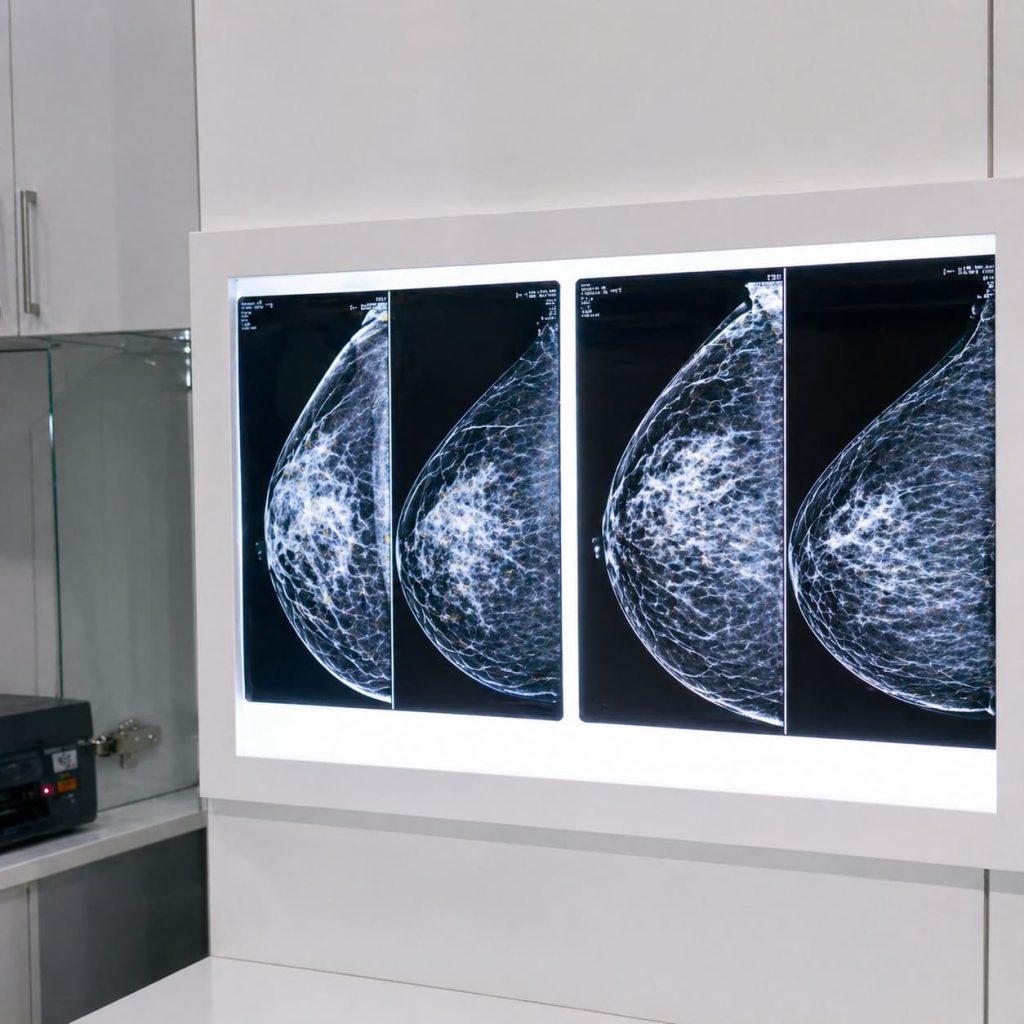
For invasive breast cancer, NICE recommends an ultrasound of the underarm lymph nodes before treatment starts. A scan can show a node that looks wrong. Only a tissue sample can confirm that cancer cells are actually in it.
| Finding | What it shows | Why it matters |
|---|---|---|
| A suspicious node on ultrasound | The node has features that warrant a closer look | Your team will usually arrange ultrasound-guided needle sampling to check for cancer cells |
| Cancer confirmed by needle biopsy before surgery | Nodal involvement is established before you go to theatre | The operation is likely to include axillary node clearance, which removes a larger group of underarm nodes |
| Cancer found during sentinel lymph node biopsy | Nodal involvement is found during the operation itself | How much cancer is in the node then guides whether any further underarm treatment is needed |
A sentinel lymph node biopsy takes the first node, or small group of nodes, that the breast drains into. NICE uses it to stage the underarm when the ultrasound looked clear, or when needle sampling came back negative.
When you read your own result, check which of the three it describes. A scan finding and a pathology result are not the same thing.
Expert advice on breast cancer treatment, cosmetic breast surgery, and reconstruction options in London.
Book a ConsultationOne positive node can mean several different things
“Positive lymph node” covers a range of findings, and the amount of cancer in the node is what changes the recommendation.
Isolated tumour cells are tiny clusters of cancer cells. For decisions about further underarm treatment after your main operation, NICE counts these as lymph node-negative.
Micrometastasis means a deposit larger than 0.2 mm but no bigger than 2 mm. Where sentinel nodes contain only micrometastases, NICE does not recommend further axillary treatment after primary surgery.
Macrometastasis is a larger deposit, and this is the finding that opens a discussion about treating the armpit further.
Extranodal spread, sometimes written as extracapsular spread, means cancer cells have been found in the tissue just outside the node. It is read alongside everything else in the report rather than on its own.
Reports also give a count. “2/10” means two of the ten nodes removed contained cancer. That number feeds into your stage, but it does not set it, and it cannot predict how things will go for you personally.

Take the exact wording of your ultrasound, biopsy or surgical pathology report to your appointment. How the involvement was found changes the treatment discussion as much as the fact of it.

Your nodes are only part of the treatment decision
Positive nodes influence treatment without deciding it. What also counts is how the involvement was found, how much cancer is there, which breast operation is planned, and the biology of the cancer itself.
Treating the armpit depends on what was found
Cancer confirmed by needle biopsy before surgery leads to a different conversation from cancer found in a sentinel node during it. Where needle sampling has confirmed cancer in a node, NICE recommends axillary node clearance.
After a macrometastasis in a sentinel node, further treatment may mean node clearance or radiotherapy to the underarm area instead. For some people having breast-conserving surgery, there is now a discussion to be had about the benefits and risks of no further underarm treatment at all.
Micrometastases and isolated tumour cells go down a different route after primary surgery. This is why “one positive node” is never enough on its own to say whether more armpit treatment is needed.
Drug treatment turns on the biology of the cancer
Chemotherapy treats cancer cells anywhere in the body, and a positive node does make it more likely to come up. It is one input, not the decision.
Tumour biology means the features that determine how a cancer behaves and what it responds to: oestrogen receptor status, HER2 status, grade, and how the cancer responded to any treatment given before surgery. Hormone treatment or HER2-targeted treatment may be part of the plan depending on those features.
A good recommendation explains how your node result and your tumour biology point in the same direction.

More armpit surgery is not automatically safer
Treating the underarm can leave lasting effects, so the amount of treatment should match the benefit you would actually get from it. Axillary node clearance, and radiotherapy to the underarm or the nodes above the collarbone, both carry a higher risk of shoulder problems and of lymphoedema, which is swelling caused by fluid that cannot drain away.
Two old rules have since been overturned:
- Physical activity does not cause lymphoedema or make it worse. Exercising the arm is encouraged rather than avoided.
- There is no consistent evidence that blood pressure readings, injections or blood tests on the treated side raise the risk of lymphoedema.
Your own team will still give you advice tailored to the surgery and radiotherapy you have had. The aim throughout is to treat the armpit properly while leaving out treatment that would add little for the pattern of disease found.
Ask how the size and number of the deposits relate to the underarm treatment being proposed. Isolated tumour cells, a micrometastasis and a macrometastasis are three different situations, and only one of them routinely leads to more surgery.

Ask what was found, then ask what it changes
The useful question is not whether a node is positive. It is what exactly was found, and what that alters about your plan.
- How was the involvement found? Ultrasound, needle biopsy or sentinel node biopsy, and does the report confirm cancer or only raise suspicion?
- How many nodes contained cancer, out of how many removed?
- Does the report say isolated tumour cells, micrometastasis, macrometastasis, or mention extranodal spread?
- Is further underarm treatment recommended? If so, clearance or radiotherapy, and what tipped the decision?
- What has the node result changed about the chemotherapy discussion, alongside the hormone receptor status, HER2 status and grade?
- Has the multidisciplinary team looked at the surgery, the radiotherapy and the drug treatment as one plan?
A plan that holds up will explain not just what is recommended, but why this particular pattern of involvement leads there. Mr Ghosh can go through the pathology, the imaging and the proposed operation together where a surgical view on that is what you need.
Expert breast surgery advice from a leading London consultant with over 30 years of experience.
Book ConsultationCommon questions about breast cancer in lymph nodes
Can breast cancer in lymph nodes still be treated with curative intent?
Yes, in many cases. Involvement of the nearby underarm nodes happens in both early and locally advanced breast cancer, and treatment is given with the aim of cure unless tests show the cancer has reached distant parts of the body.
Does a suspicious lymph node on an ultrasound scan mean cancer is confirmed?
No. A scan can show a node that looks abnormal, but it takes needle sampling or surgical pathology to establish whether cancer cells are in it. Plenty of suspicious-looking nodes turn out to be reactive rather than cancerous.
What does extranodal spread mean on a pathology report?
It means cancer cells have been found in the tissue immediately around a lymph node, rather than staying inside it. Your team reads it alongside the number of involved nodes and the features of the breast cancer.
Will a mastectomy remove the need for lymph node assessment?
No. The nodes are assessed separately whichever breast operation you have, because they answer a different question: whether the cancer has reached beyond the breast. The two form connected parts of one surgical plan.
Can lymph node-positive breast cancer come back after treatment?
It can, and the node result is one of the things that feeds into a discussion about that risk. On its own it predicts very little. Tumour biology, how the cancer responded to treatment, and the treatments you go on to have all carry weight.
This is general information, not medical advice.
Reviewed by Mr D. B. Ghosh, Consultant Breast Surgeon, dual European Board certified (FEBS) in Breast Surgery and Surgical Oncology, and Board Certified in Cosmetic Breast Surgery through the Royal College of Surgeons scheme. GMC 4657664.