Is risk-reducing mastectomy the right choice if you carry a high-risk breast cancer gene?
Risk-reducing mastectomy may be a sensible option if you carry a high-risk breast cancer gene, but the choice depends on your gene, age, family history, previous breast cancer history and attitude to screening. We treat it as three decisions: whether surgery fits, when to consider it, and which surgical route suits you.
Define the decision before the operation
A high-risk gene result opens a serious decision, not an instruction. Risk-reducing mastectomy means removing healthy breast tissue from both breasts to lower future breast cancer risk. You may also hear it called preventive mastectomy or prophylactic mastectomy, but risk-reducing mastectomy is the more accurate term.
Breast Cancer Now says bilateral mastectomy can reduce the risk of developing breast cancer by 90% to 95%. That figure matters, but so does the limit. The operation does not remove every trace of breast tissue, so a small residual risk remains.
NICE guideline CG164 is clear that bilateral risk-reducing mastectomy is for a small proportion of women from high-risk families and should be managed with a multidisciplinary team, meaning clinicians from the relevant specialties reviewing the case together. In plain terms, having the gene and needing the operation are different things.
Our usual way to frame the decision is simple:
- Whether surgery is proportionate for your personal risk.
- When the timing makes sense in your life and care plan.
- What operation, reconstruction or flat closure route fits your body and priorities.
That structure keeps the decision clinical, practical and personal.
Expert advice on breast cancer treatment, cosmetic breast surgery, and reconstruction options in London.
Book a ConsultationBase your choice on more than the gene name
Your gene result matters, but it is never the whole answer. BRCA1, BRCA2, PALB2 and TP53 are commonly discussed in relation to risk-reducing breast surgery, and genes such as CHEK2 and ATM may lead to a surgery discussion depending on family history.
NICE defines high breast cancer risk as a lifetime risk from age 20 of 30% or greater. That figure gives a threshold, but your consultation still needs to translate risk into a real decision. Current age, the age at which relatives developed breast cancer, previous treatment and your ability to live with ongoing screening all change the balance.
At D B Ghosh Breast Surgeon Specialist in Cancer and Cosmetic Surgery, we review the genetic report alongside the clinical picture, because a lab result by itself does not tell us which operation suits you, or whether surgery should happen now. A London-based consultant opinion can be especially useful if you have had mixed advice, are seeking a second opinion, or are weighing breast surgery after a previous breast cancer.
A proper review should bring together:
- Your genetic report. We look at the named gene, the type of change reported and whether genetics input is already complete.
- Family history, including which relatives were affected and their age at diagnosis.
- Previous breast cancer treatment, if relevant, especially if you are considering surgery to reduce risk in the other breast.
- Current imaging and breast factors, including breast density and anatomy where they affect planning.
- Your tolerance of surveillance. Some people cope well with repeated scans. Others find the cycle hard to live with.
- Fertility plans and wider risk discussions, because timing can involve more than the breasts.
Genetic counselling in a specialist cancer genetic clinic should happen before the decision is made. Formal tools such as the CanRisk (BOADICEA) risk score may also help turn family history and gene information into a clearer risk estimate.
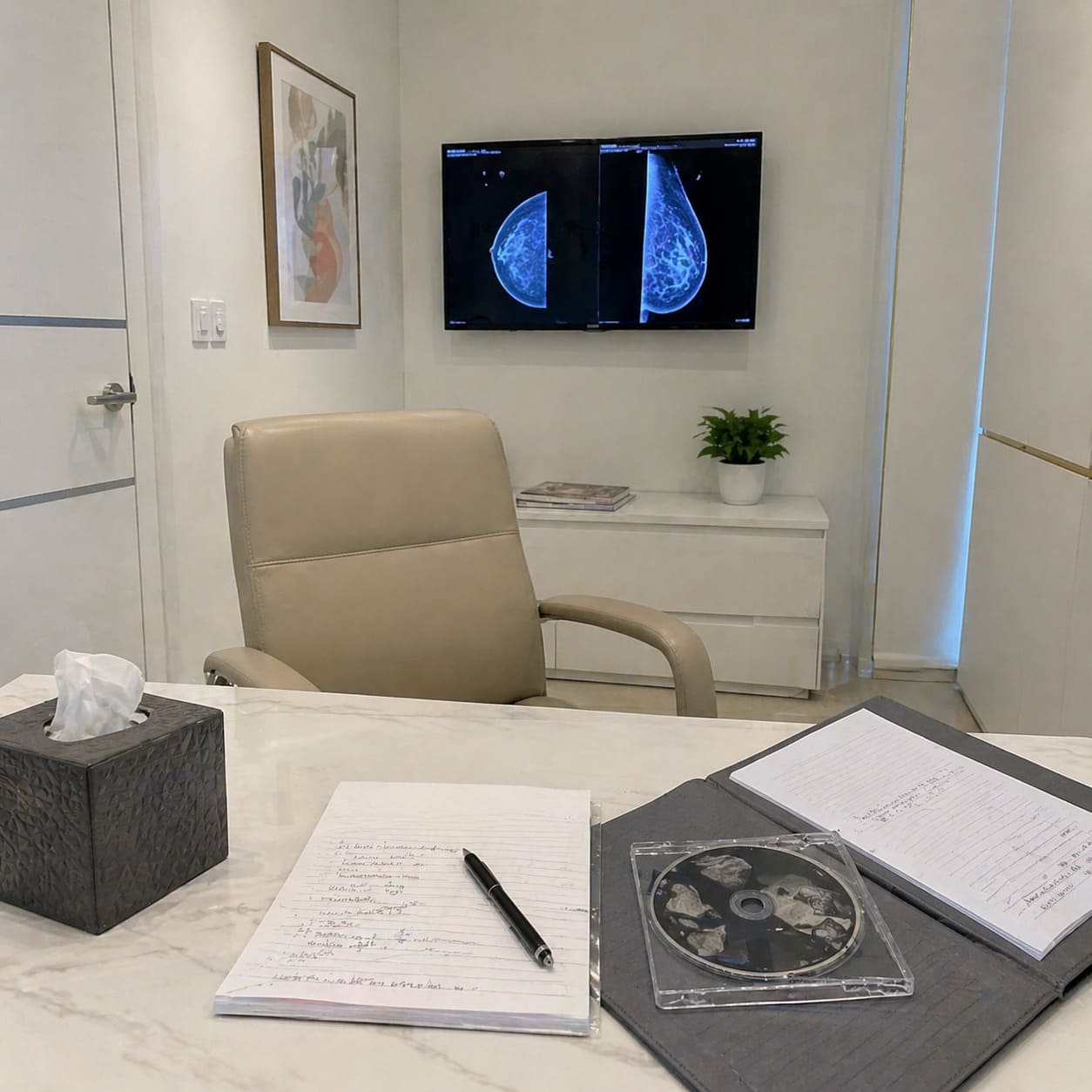
Bring your genetic report to clinic, including the exact gene name and wording of the result. That makes it easier to link the report to your family history and imaging.

Compare surgery with active non-surgical management
Choosing not to have surgery now is still a plan if the monitoring is suitable for your level of risk. The key difference is that surgery aims to lower the chance of developing breast cancer, and screening aims to find cancer early if it develops.
Here is the practical comparison we use in clinic.
| Option | What it is for | Main limit |
|---|---|---|
| Risk-reducing mastectomy | Lowers future breast cancer risk by removing healthy breast tissue from both breasts | It does not remove all risk and it involves permanent body change |
| High-risk breast screening | Uses breast MRI scans and mammograms to look for cancer early | It does not prevent breast cancer |
| Chemoprevention | Uses medicines such as tamoxifen, anastrozole or raloxifene where clinically suitable | It is aimed at certain breast cancer types and does not replace surgery for everyone |
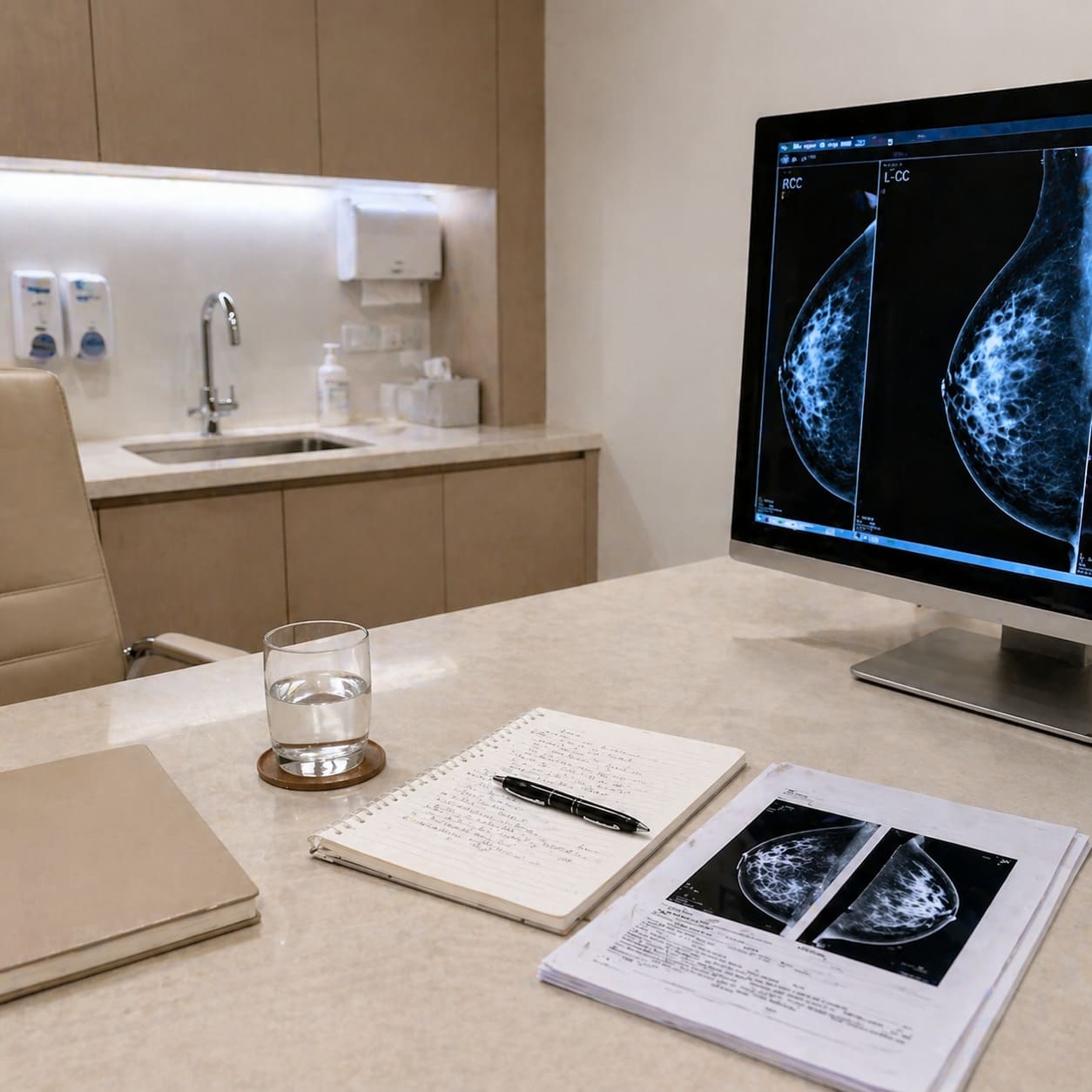
Macmillan describes high-risk breast screening as usually involving MRI scans and mammograms, usually once a year, with the starting and finishing ages depending on risk. For some people, that is an active and acceptable route. For others, repeated imaging becomes the part of risk management they find hardest.
Chemoprevention is a separate discussion. Macmillan describes it as taking a tablet every day for 5 years, with a 30% to 40% reduction in the risk of oestrogen receptor-positive breast cancer. That means it is useful only in the right clinical setting, and it does a different job from surgery.
Some high-risk genes also raise ovarian or fallopian tube cancer risk, which needs its own specialist discussion. For example, Breast Cancer Now says ovarian cancer risk starts to increase significantly from age 40 for people with an altered BRCA1 gene and from age 45 for people with an altered BRCA2 gene. We keep that linked to the wider risk plan, but we do not let it blur the breast surgery decision.
Choose the operation around clinical suitability
Two people can carry the same gene and need different operations. One may be a good candidate for nipple-sparing surgery with immediate reconstruction. Another may be safer with a different mastectomy pattern, delayed reconstruction or a planned flat closure.
Match nipple-sparing surgery to risk and anatomy
Nipple-sparing mastectomy removes breast tissue but keeps the nipple. It can be the right route for some high-risk patients, but suitability depends on anatomy, blood supply to the nipple, cancer risk factors and the reconstruction plan.
A standard bilateral mastectomy removes both breasts including the nipples. A nipple-sparing approach leaves the nipples in place, which changes the planning and the risks we need to discuss. We assess it as a clinical option first, and appearance comes after that.
At D B Ghosh Breast Surgeon Specialist in Cancer and Cosmetic Surgery, we link this decision to oncoplastic and reconstructive planning from the start. That matters because the incision, skin envelope and reconstruction choice all affect each other. No operation can promise normal sensation or a guaranteed appearance, so those points need to be discussed before surgery, not afterwards.
Choose reconstruction timing deliberately
Immediate reconstruction means the breast shape is rebuilt at the same operation as the mastectomy. Delayed reconstruction means reconstruction happens later, which can be months or years afterwards.
Implant-based reconstruction uses an implant. Autologous reconstruction means reconstruction using your own tissue, sometimes called a flap. Flat closure means planning a smooth chest wall shape without reconstruction, and it can be the right decision for someone who does not want further breast rebuilding.
NICE says women considering bilateral risk-reducing mastectomy should be able to discuss immediate and delayed reconstruction with a surgical team member who has specialist oncoplastic or breast reconstructive skills. That discussion should include body image, sexual consequences, scars and the chance of later revision surgery, because those are part of the decision rather than side issues.
Ask how the operation affects reconstruction timing before you decide on surgery. The mastectomy pattern, skin envelope and nipple planning can change what is possible later.

Plan timing, recovery and the clinic questions that matter
Timing, recovery and confidence in the plan all depend on the quality of the assessment. Risk-reducing mastectomy is usually a planned decision unless a separate breast cancer treatment issue changes the timetable.
Macmillan says the decision process usually involves several appointments with different healthcare professionals and can take several months. That may sound slow when you want certainty, but the time is used to check genetics, review imaging, compare surgical options and make sure the operation fits the risk.
Recovery depends heavily on reconstruction type. Macmillan says implant reconstruction may involve up to 2 nights in hospital, while a tissue flap operation may involve up to 7 nights. Wounds usually heal within 6 weeks, although wound healing can take longer. Driving is usually possible within a few weeks, but only when you can control the car safely and your insurer’s guidance is satisfied.
After risk-reducing breast surgery, routine screening tests may no longer be needed, but regular checking of the breast area still matters because a small amount of breast tissue remains. That is why follow-up should explain what to look for and where to seek review if something changes.
These are the clinic questions that test whether the plan has been properly thought through:
- What is my individual breast cancer risk, and how has it been calculated?
- How does my gene result change the discussion compared with my family history alone?
- If I have had breast cancer before, how does that affect the other breast decision?
- Which mastectomy pattern fits my anatomy and risk profile?
- What are the realistic options for immediate reconstruction, delayed reconstruction or flat closure?
- How would recovery differ between implant-based reconstruction and using my own tissue?
- What would make you advise against nipple-sparing surgery in my case?
- Which parts of this decision need genetics, radiology or psychology input before I decide?
London-based consultant breast and oncoplastic care is often sought by patients from across the UK and overseas because this decision benefits from joined-up review. Over the next 12 to 24 months, formal genetic risk interpretation and models such as CanRisk (BOADICEA) will carry even more weight in clinic. The skill will be turning better risk data into a surgical plan that still makes sense for one person.
Expert breast surgery advice from a leading London consultant with over 30 years of experience.
Book ConsultationCommon questions about risk-reducing mastectomy
Can you still get breast cancer after a double mastectomy?
Yes. Risk-reducing mastectomy lowers breast cancer risk substantially, but it does not remove every trace of breast tissue, so a small residual risk remains.
Is nipple-sparing mastectomy safe for BRCA carriers?
Nipple-sparing mastectomy may be suitable for some BRCA carriers, but it needs surgical assessment. We look at anatomy, nipple blood supply, risk factors and the reconstruction plan before treating it as an option.
Do I still need breast screening after risk-reducing mastectomy?
Routine screening tests may no longer be needed after risk-reducing breast surgery, but you still need to check the breast area regularly. A small amount of breast tissue remains after surgery.
Does a negative BRCA test mean I have no inherited breast cancer risk?
No. Other genes and family history can still matter, so a negative BRCA result does not automatically end the risk discussion.
Can I choose flat closure instead of reconstruction?
Yes. Flat closure can be a planned surgical outcome where it fits your priorities and clinical situation, and it should be discussed with the same care as reconstruction.
This is general information, not medical advice.