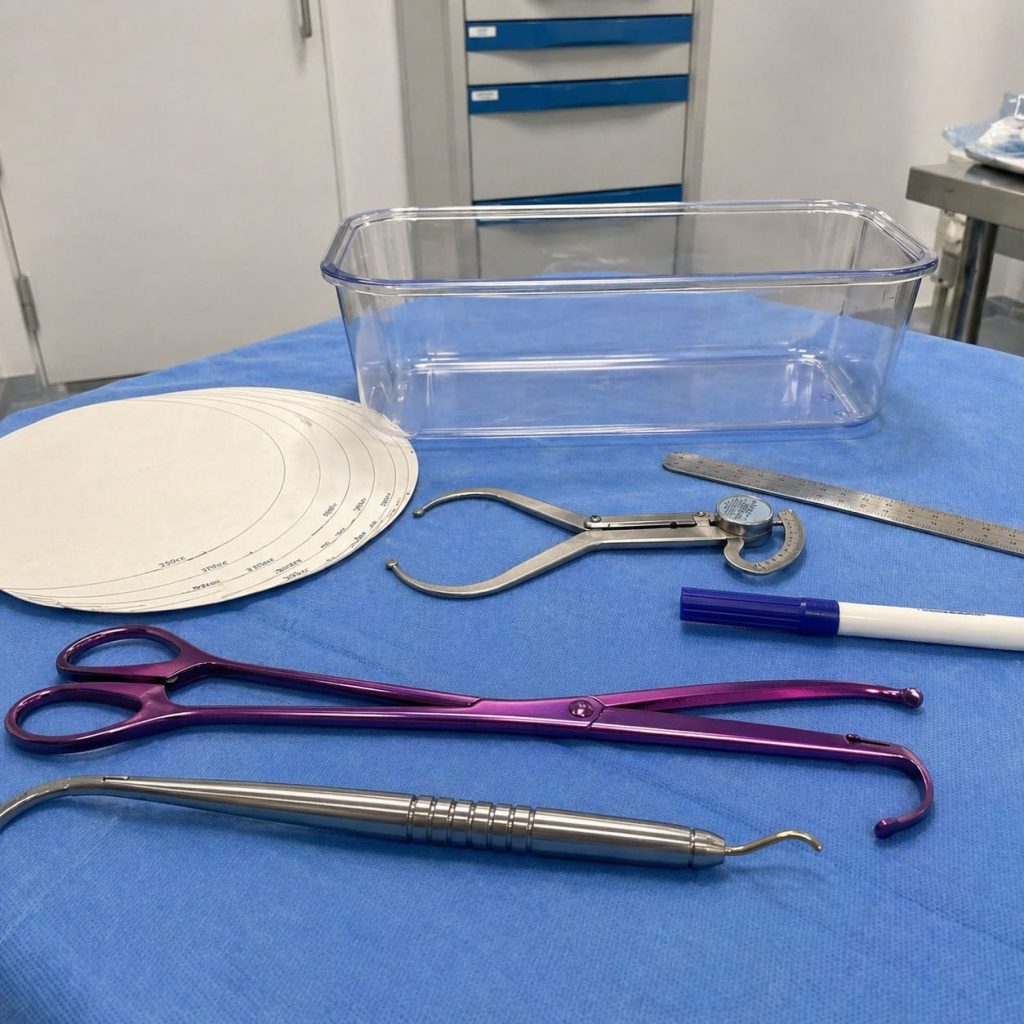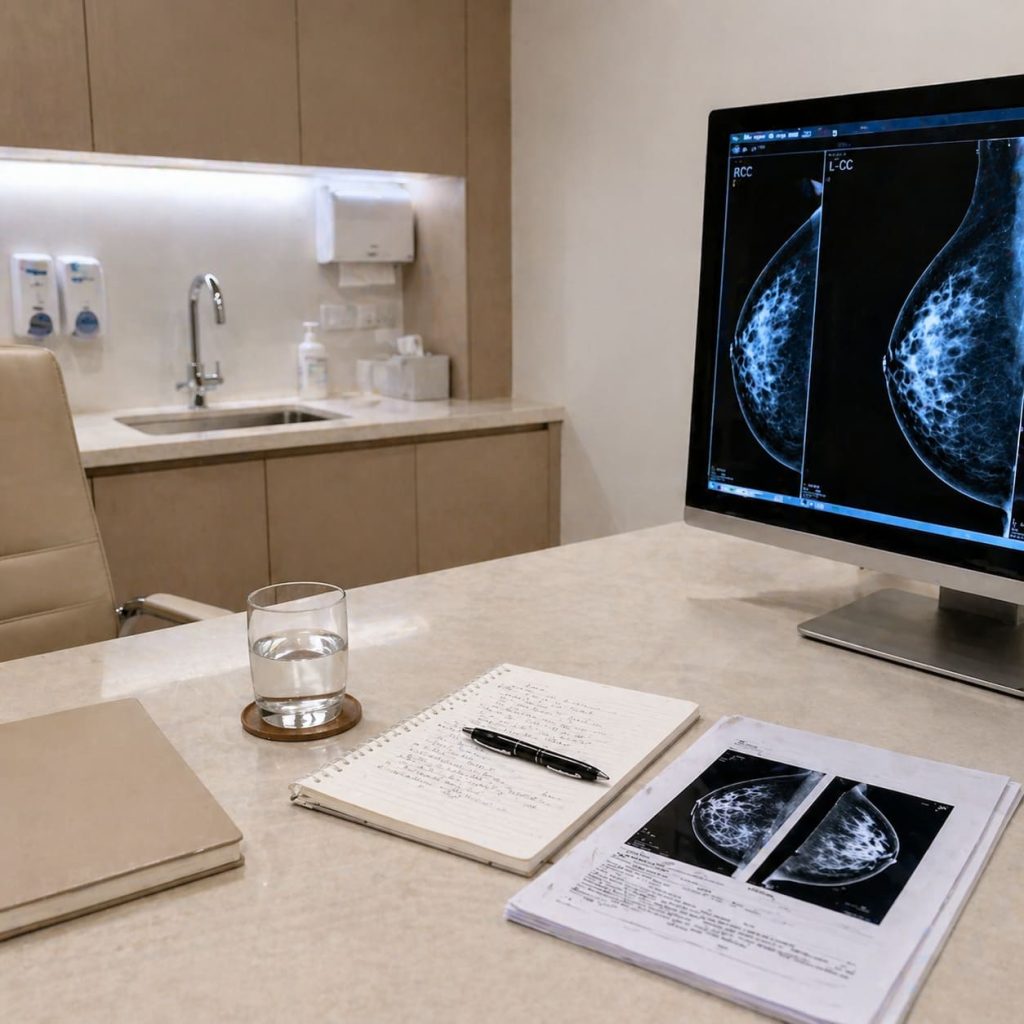

What does private BRCA gene testing in London involve?
Private BRCA gene testing in London involves clinician-led germline testing. Germline testing examines the inherited DNA you were born with. A clinician or genetic counsellor reviews your family history, selects the appropriate test and explains what each possible result could mean for your care and relatives.
A “faulty gene” usually means a pathogenic or likely pathogenic variant. This is a gene change linked with a higher inherited cancer risk. It gives information about risk and future planning.
Testing may be relevant if you have:
- A relative with a confirmed BRCA1 or BRCA2 variant.
- A family history of breast, ovarian, prostate or pancreatic cancer.
- A current breast cancer diagnosis where an inherited result could inform treatment.
BRCA variants can pass through either side of your family. Men can carry a BRCA variant and pass it to their children.
The NHS England National Genomic Test Directory states that testing has most value when the result is likely to guide surveillance, treatment, reproductive decisions or testing within a family. A useful test begins with a clear clinical question.
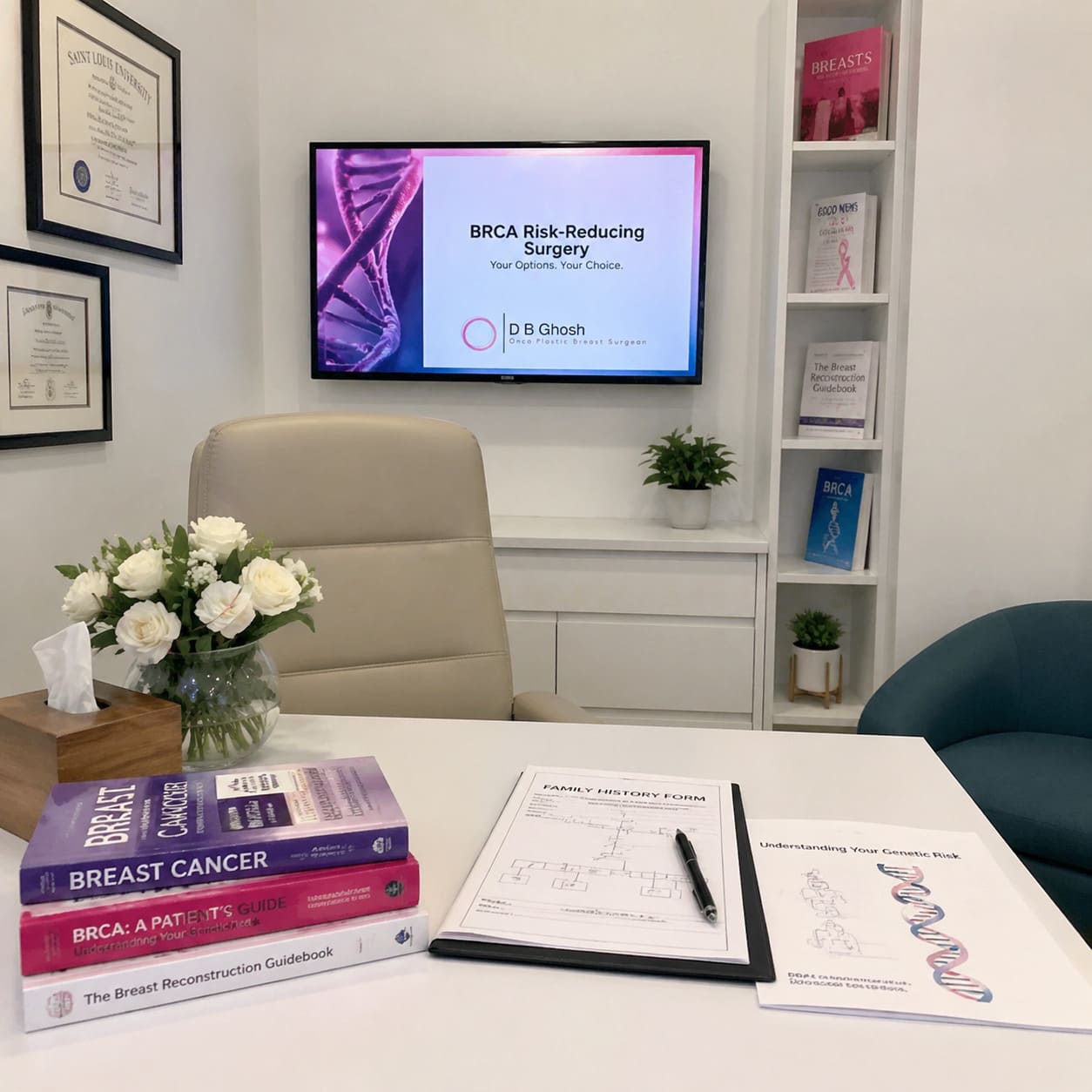
Your family question defines the right test
The correct test is chosen before any sample is collected. Someone with a known familial pathogenic variant needs a different test from someone whose family history has no identified genetic cause.
Targeted predictive testing looks for the specific variant already found in a relative. Broader diagnostic testing examines BRCA1 and BRCA2, sometimes alongside other inherited cancer genes. The NHS inherited breast and ovarian cancer panel may include PALB2, with specified testing of genes such as ATM, CHEK2, RAD51C and RAD51D.
This table shows why the route affects the meaning of a result.
| Testing route | When it may be considered | What a negative result can mean | Key limitation |
|---|---|---|---|
| Targeted familial-variant testing | A relative has a confirmed BRCA variant | It can show whether you inherited the known family variant | It answers one specific family question |
| Broader clinician-led diagnostic testing | Family history suggests inherited cancer risk, with no known variant | It may leave the family history without a genetic explanation | The panel needs to match your personal and family history |
| Limited consumer testing | A person has bought a test independently | A selected-variant result may leave other BRCA variants untested | A result needs formal clinical confirmation before it guides treatment or preventive decisions |
Consumer tests may check selected variants and may not examine both BRCA genes comprehensively. A negative limited test result therefore does not settle whether clinical inherited cancer testing is appropriate.
A private assessment in London should establish the question the laboratory test needs to answer before sampling is arranged.
Expert advice on breast cancer treatment, cosmetic breast surgery, and reconstruction options in London.
Book a ConsultationConsent, sampling and interpretation form the testing pathway
A private BRCA test consultation should cover the clinical purpose of testing before the laboratory receives a sample. Consent matters because the result may affect your own care and information shared within your family.
A clinician-led pathway commonly includes the following stages:
- Family and medical history review. Your clinician looks at cancers on both sides of the family and considers any current diagnosis.
- Discussion of possible results. You should know the difference between a pathogenic result, a negative result and a variant of uncertain significance before testing proceeds.
- Test selection. The clinician decides whether targeted testing for a known family variant or broader inherited cancer gene testing fits your situation.
- Sample collection and laboratory analysis. The sample method and laboratory process depend on the service and the test selected.
- Results discussion. A clinician explains what the result means for you, your relatives and any future care decisions.
Ask what genes the test covers, whether a known family variant will be targeted, and how results will be explained. Ask whether the service will arrange formal clinical confirmation if a consumer result has raised concern.
A stated result timeframe must be specific to the laboratory, the test scope and any confirmation required.

Ask the service to confirm which genes are included and whether testing targets a known familial variant before providing a sample.

Three result categories define the next steps
A pathogenic BRCA result identifies increased inherited cancer risk. A current cancer diagnosis requires separate clinical assessment and treatment planning.
Pathogenic or likely pathogenic variant. This result identifies a gene change associated with disease risk. It may affect current breast cancer treatment, future risk planning and testing for relatives. The meaning depends on the gene involved, your family history and whether you are already receiving cancer treatment.
Negative result. When a family variant is already known, a negative result can clarify that you have not inherited it. Where no familial pathogenic variant has been identified, a negative result may leave the family history unexplained.
Variant of uncertain significance. A variant of uncertain significance, often shortened to VUS, is a gene change with insufficient evidence to show whether it causes disease. Clinical teams keep a VUS outside treatment and risk-management decisions while further evidence is assessed. Predictive testing for relatives follows confirmation of a pathogenic familial variant.
A clinician interprets the laboratory report in its clinical context.

Confirmed BRCA carriers need an individual care plan
A confirmed pathogenic BRCA1 or BRCA2 result can affect relatives as well as your own care. Each child or sibling has a 50% chance of inheriting a confirmed familial variant through either parent.
Clinical genetics services can discuss cascade testing, which offers relatives a way to find out whether they carry the known family variant. Reproductive implications can also form part of the discussion where they matter to you.
Surveillance and surgery serve different purposes
NHS England guidance applies in England and uses age-dependent breast magnetic resonance imaging, known as MRI, and mammography for women at very high genetic risk. Surveillance aims to find breast cancer earlier.
Risk-reducing bilateral mastectomy is surgery to remove breast tissue and lower future breast cancer risk. Small amounts of breast tissue remain after surgery, so some risk remains. Reconstruction options and the timing of surgery form part of the discussion where surgery is chosen.
After an appropriately interpreted result, Mr Ghosh personally assesses your risk-reducing breast surgery options and reconstruction considerations. He discusses the individual trade-offs. Your age, family history, current cancer treatment, reproductive plans and personal priorities define the plan.
Keep a record of cancer diagnoses on both sides of your family, including the relative affected and their age at diagnosis, for the clinical history review.

Clinical interpretation matters more than sample type
A laboratory report alone cannot answer every question raised by inherited cancer risk. The value of a private BRCA test lies in selecting the right scope, confirming clinically significant findings and interpreting the result in the context of your health and family history.
Limited consumer results need formal confirmation in a clinical diagnostic laboratory before they inform preventive surgery or cancer treatment. A clinician should interpret your result and arrange follow-up alongside the laboratory test.
The test should answer the right inherited-risk question and lead to a clear clinical plan.
Expert breast surgery advice from a leading London consultant with over 30 years of experience.
Book ConsultationCommon questions about private BRCA testing
Do I need a GP referral for private BRCA testing?
No. You can discuss family history and NHS testing routes with your GP. You can also book a private consultation directly to discuss whether testing is appropriate.
How long do private BRCA test results take?
Result times depend on the laboratory, the test scope and whether a known family variant is being checked. Confirmation testing can also affect the timeframe.
Can men carry a BRCA gene variant?
Yes. Men can carry BRCA1 or BRCA2 variants and pass them to their children. A paternal family history can therefore be relevant when assessing inherited cancer risk.
Will the test use blood or saliva?
The sample method depends on the laboratory and testing service. Confirm the sample method and test scope before you proceed.
What happens if a relative has a confirmed BRCA variant?
Targeted predictive testing may show whether you inherited the same familial variant. A clinician or genetic counsellor can explain what the result means for your own care.
This is general information, not medical advice.
Reviewed by Mr D. B. Ghosh, Consultant Breast Surgeon, dual European Board certified (FEBS) in Breast Surgery and Surgical Oncology, and Board Certified in Cosmetic Breast Surgery through the Royal College of Surgeons scheme. GMC 4657664.