Who does implant based breast reconstruction in London suit?
Implant based breast reconstruction in London may suit you after mastectomy for breast cancer or risk reduction. It may be suitable when your cancer treatment plan, skin quality and likely radiotherapy support it. The operation uses an implant to create breast shape. A reconstruction discussion may lead to an implant, your own tissue, delayed reconstruction or remaining flat.
Implant-based breast reconstruction creates breast shape after mastectomy with a permanent implant. Some people have a temporary tissue expander first. This is an adjustable implant that is filled gradually before it is exchanged for a permanent implant.
Reconstruction is an option to discuss after mastectomy. An implant is one possible method within that discussion. Your cancer treatment comes first, followed by the safety of the mastectomy and the quality of the skin and tissues left after surgery.
NICE, which covers England, says breast reconstruction should be offered after mastectomy for breast cancer. Immediate reconstruction, delayed reconstruction and no reconstruction are all valid choices.
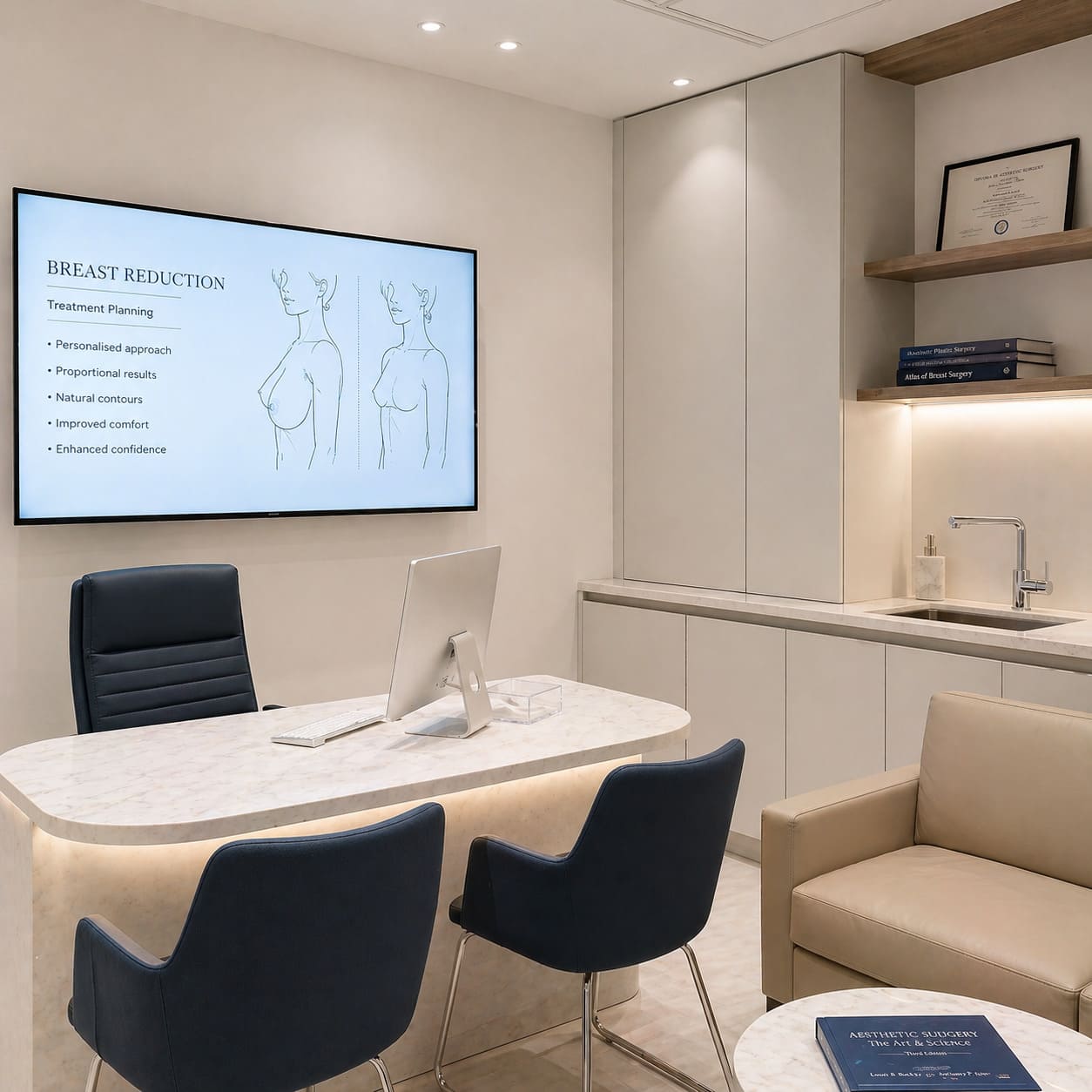
Your treatment plan determines implant suitability
Possible radiotherapy does not automatically prevent immediate breast reconstruction. Radiotherapy can affect the skin around an implant and increase the chance of hardening or distortion, so it may affect the timing or type of reconstruction.
Your breast team considers the cancer operation before recommending a reconstruction route. The discussion includes the mastectomy plan, the skin left after surgery, your breast shape, previous operations, smoking, general health and the extra cancer treatment you may need.
An implant may sit above the chest muscle or below it. Placement above the muscle is called prepectoral reconstruction. Placement below the muscle is called subpectoral reconstruction. The remaining skin and tissue help determine which position is possible. A biological support material called an acellular dermal matrix may also support an implant in selected cases.
The table compares the timing and stages of four reconstruction routes.
| Option | What it involves | Main consideration |
|---|---|---|
| Immediate reconstruction | Reconstruction begins during the mastectomy operation. | Your cancer treatment plan and skin quality must support surgery at that time. |
| Delayed reconstruction | Reconstruction takes place after mastectomy and any planned cancer treatment. | This route allows treatment to finish before reconstruction begins. |
| Direct-to-implant reconstruction | A permanent implant is placed during reconstruction. | The mastectomy skin and tissues must safely cover and support the implant. |
| Tissue-expander reconstruction | A temporary implant is gradually filled before exchange for a permanent implant. | The treatment involves planned expansion appointments and a later operation. |
A consultation can bring the surgical, imaging, pathology and oncology considerations into one reconstruction discussion. Mr Ghosh personally leads your assessment, explanation and reconstruction planning throughout.
Expert advice on breast cancer treatment, cosmetic breast surgery, and reconstruction options in London.
Book a ConsultationRecovery covers surgery and later reconstruction stages
You recover from implant reconstruction and complete reconstruction in separate stages. Broad recovery from the operation commonly takes four to six weeks, although your own pace depends on the surgery and any complications.
That estimate does not set a return-to-work, driving or exercise date. Drain care, wound healing and further cancer treatment affect your individual plan. Your treating team gives the instructions that apply after your operation.
A tissue expander creates a longer pathway. The surgeon fills it with saline at planned appointments to stretch the skin and underlying tissue. Expansion commonly takes eight to 12 weeks, and the full process may take three to six months before exchange for a permanent implant.
Several operations are common in both immediate and delayed reconstruction. Further surgery may include implant exchange, adjustment of the reconstructed breast or a procedure to improve symmetry with the other breast.
A reconstructed breast does not match a natural breast exactly. An implant reconstruction is commonly firmer, less mobile and colder than a reconstruction made with your own living tissue. Sensation is usually reduced after mastectomy, and numbness or pins and needles may persist.
Questions worth taking to a reconstruction consultation include:
- How likely is radiotherapy in my treatment plan, and how would it affect the timing or method of reconstruction?
- Does my mastectomy skin have enough quality and thickness for a permanent implant straight away?
- Would a tissue expander give a safer or more suitable route for my surgery?
- What restrictions will apply to driving, work, lifting and exercise after my operation?
- What further surgery might be part of my reconstruction plan, including surgery for symmetry?
Your recovery protocol should come from the team treating you, because the details follow your operation and cancer care.
Ask how radiotherapy could affect the timing and method of reconstruction before choosing between immediate and delayed surgery.

Plan for long-term implant review
Implant reconstruction in London requires long-term planning. Breast implants have no fixed replacement date. An implant may remain in place for many years when it causes no problem, although a replacement or revision may become appropriate later.
Scar tissue naturally forms around an implant. Capsular contracture occurs when that scar capsule tightens. It can make the reconstructed breast hard, painful or misshapen. Implant movement, rippling, asymmetry, leakage and rupture can also lead to review or further surgery.
One-sided reconstruction needs particular thought. Your natural breast continues to change with age and weight, so differences in shape or position can become more noticeable over time.
Breast implant-associated anaplastic large cell lymphoma, called BIA-ALCL, is an uncommon lymphoma associated with breast implants. The Medicines and Healthcare products Regulatory Agency advises you to seek an assessment if you develop new swelling, a fluid collection called a seroma, a lump or distortion around an implant. Clinicians record implant insertion and removal details in the Breast and Cosmetic Implant Registry.
Long-term planning recognises that implant reconstruction may involve later review, adjustment or further surgery. The pathway is not always one permanent operation.

Take questions about future procedures, implant review and symmetry surgery to your consultation, because reconstruction may involve several planned stages.

Common questions about implant-based breast reconstruction
Can I have reconstruction if I choose a risk-reducing mastectomy?
Yes. Implant reconstruction, reconstruction using your own tissue, delayed reconstruction and remaining flat can all form part of the discussion after risk-reducing mastectomy. Your anatomy, health and surgical plan guide the options.
Does radiotherapy rule out an implant reconstruction?
No. Radiotherapy can affect implant outcomes and may change the recommended timing or method. Immediate reconstruction remains an option for some people who may need radiotherapy.
Will an implant reconstruction have normal feeling?
No. Mastectomy surgery commonly reduces breast sensation. Numbness or pins and needles may improve over time, although some altered sensation can persist.
Do breast reconstruction implants need replacement after ten years?
No. Breast implants have no automatic replacement timetable. Review or replacement depends on symptoms, changes in the reconstructed breast or an implant-related problem.
Why might I need more surgery after reconstruction?
Further surgery may form part of a staged plan or address symmetry, implant position, scar tissue or another implant-related change. Your surgeon can explain which later procedures are possible in your own case.
This is general information, not medical advice.
Reviewed by Mr D. B. Ghosh, Consultant Breast Surgeon, dual European Board certified (FEBS) in Breast Surgery and Surgical Oncology, and Board Certified in Cosmetic Breast Surgery through the Royal College of Surgeons scheme. GMC 4657664.
Expert breast surgery advice from a leading London consultant with over 30 years of experience.
Book Consultation