Is own tissue (autologous) breast reconstruction in London right for you?
Own tissue (autologous) breast reconstruction in London means using tissue from your own body to make a breast shape after mastectomy or related breast surgery. We start with the cancer treatment plan, then donor-site suitability, then appearance, because a sound reconstruction plan has to fit your whole pathway.
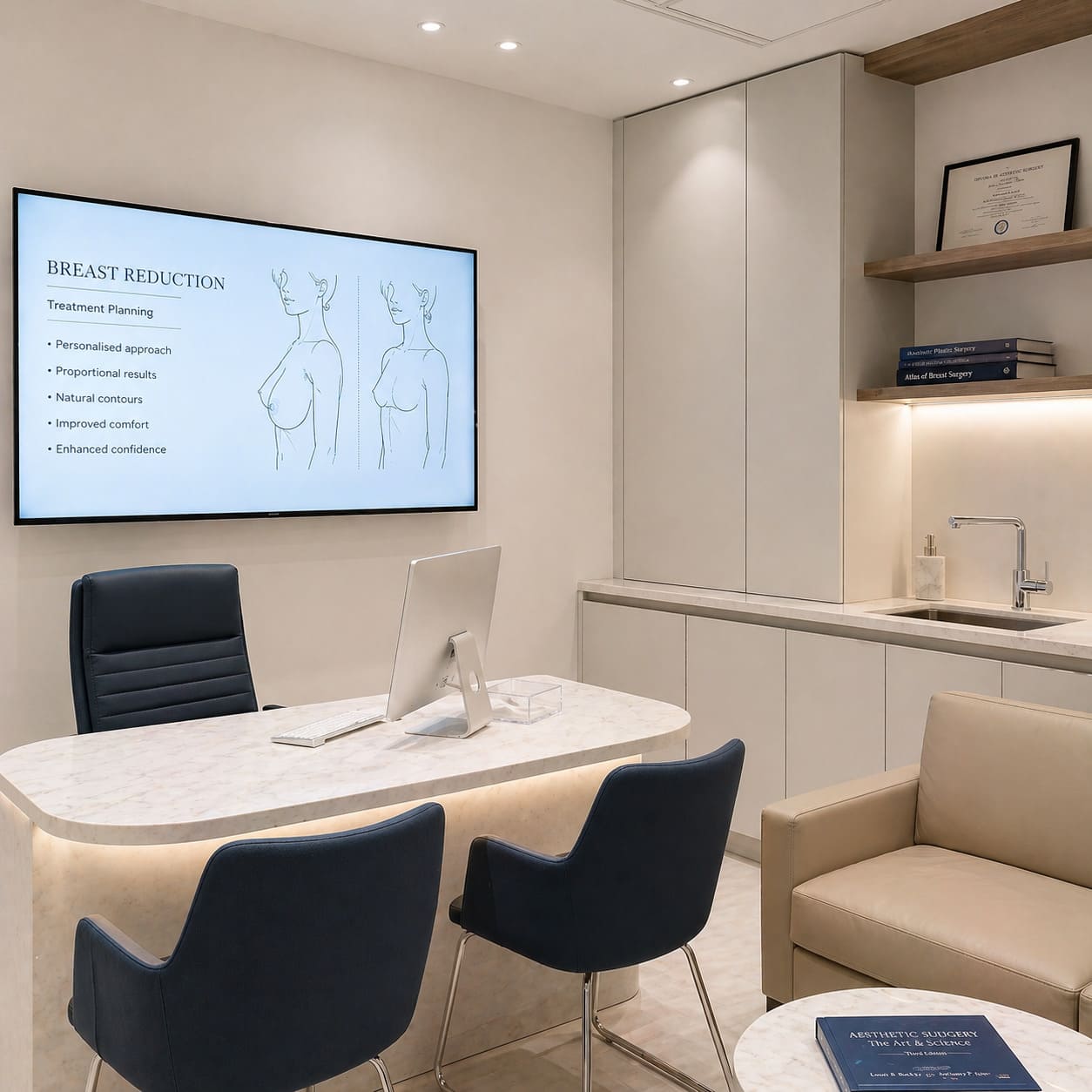
Own tissue reconstruction uses your tissue to make a breast shape
Autologous simply means from your own body. In breast reconstruction, a surgeon uses skin, fat and sometimes muscle from another part of your body to create a breast shape after mastectomy, delayed reconstruction, risk-reducing surgery or revision surgery.
Cancer Research UK describes this tissue as a flap. The part of the body the tissue comes from is called the donor site. Common donor sites include the lower abdomen, back, buttock and inner thigh, although suitability depends on your build, previous surgery and treatment plan.
Broadly, breast reconstruction can use an implant, your own tissue, or a combination of both. Own tissue breast reconstruction may suit some women very well, especially after radiotherapy or where an implant has not given a stable result, but it is a bigger operation than implant reconstruction and needs more recovery. Procedure names matter less than the order of the decision: cancer treatment plan first, reconstruction choice second.
The cancer treatment plan comes before the flap
The reconstruction plan has to follow the cancer plan. We look first at the mastectomy plan, whether radiotherapy or chemotherapy is likely, and whether reconstruction is best done straight away, later, or in stages.
NICE guideline NG101 says women advised to have a mastectomy should be offered both immediate and delayed breast reconstruction options, whether or not those options are available locally. It also says immediate reconstruction should be offered, including where radiotherapy may be needed, unless other health conditions rule out reconstructive surgery.
That does not make immediate reconstruction the automatic answer. Radiotherapy and chemotherapy can still be given after immediate reconstruction, but complications after mastectomy or reconstruction can delay further treatment. Radiotherapy can also affect reconstruction choices, and NICE notes that immediate implant reconstructions may be more affected by radiotherapy than immediate flap reconstructions.
A staged plan, sometimes called delayed-immediate reconstruction, may be discussed where the final cancer treatment pathway is still uncertain. At D B Ghosh Breast Surgeon Specialist in Cancer and Cosmetic Surgery, we keep oncological safety at the centre of reconstruction planning. The useful clinic discussion is about timing early, before a named flap starts to drive the decision.

Expert advice on breast cancer treatment, cosmetic breast surgery, and reconstruction options in London.
Book a ConsultationDIEP is common, but own tissue covers several operations
A woman may arrive asking for a DIEP flap because that is the term she has heard. She may still need a proper discussion about the abdomen, back, thigh, buttock, implant-based options and combined approaches. Own tissue reconstruction is a family of operations, not one fixed procedure.
Breast Cancer Now describes the lower abdomen as the most common donor site for flap reconstruction, with other options including the buttock, inner thigh and back. A deep inferior epigastric perforator flap, shortened to DIEP, is the best-known abdominal option. It uses skin and fat, with little or no muscle, from the lower abdomen.
Free flaps move tissue completely
In free flap reconstruction, tissue is fully moved from one part of the body to the chest, and its blood supply is reconnected. The microsurgery matters to the surgical team, but your decision is more practical. The key questions are whether that donor site is suitable for your body and whether the operation fits your treatment plan.
Other free flap names include the superficial inferior epigastric artery flap, shortened to SIEA, and the transverse rectus abdominis muscle flap, shortened to TRAM. Thigh and buttock options may include profunda artery perforator, transverse upper gracilis and gluteal artery perforator flaps. The names sound technical, but they mainly point to where the tissue comes from and what that means for scars, volume and recovery.
Pedicled flaps stay attached
In pedicled flap reconstruction, the tissue is moved into the breast area while staying attached to its original blood supply. A latissimus dorsi flap, often shortened to LD flap, uses tissue from the back and may be used alone or with an implant in selected situations.
We do not expect you to know which flap is right before consultation. The job in clinic is to match the donor site to your anatomy, previous scars, breast size, radiotherapy history and long-term priorities.
Ask how the reconstruction fits the likely cancer treatment sequence before discussing the flap name. Timing often changes the safest option.

Suitability is narrower than “natural” suggests
The word “natural” can make own tissue reconstruction sound simpler than it is. A flap may give a breast shape that is more similar to body tissue than an implant, but it remains major surgery and it creates a donor-site scar as well as breast surgery scars.
Several factors matter before we advise whether flap breast reconstruction is realistic. Body mass index, shortened to BMI, affects risk. Smoking and nicotine use matter because smoking significantly increases complication risk. Diabetes and other medical conditions can affect healing. Very slim women may have limited donor tissue, and women with larger breasts that have a natural droop may sometimes be more suited to own tissue reconstruction.
Sensation needs a plain explanation too. A reconstructed breast usually has less or no sensation compared with the natural breast. Appearance, body shape and sensation are separate issues, so a consultation needs to cover all of them without treating a good shape as the whole outcome.
If you have had previous surgery or radiotherapy, bring those details to the consultation. They can affect donor-site suitability and the recovery plan.

Own tissue and implants trade different risks
Is own tissue better than implants? We do not frame the choice that way. Each option solves different problems and brings different demands, especially around recovery, scars, radiotherapy and future adjustments.
| Issue | Own tissue reconstruction | Implant reconstruction |
|---|---|---|
| Operation and recovery | A larger operation with a donor site. Breast Cancer Now lists recovery after DIEP or SIEA flap surgery as 6 to 12 weeks. | A shorter operation in many cases. Breast Cancer Now lists recovery after implant reconstruction as 4 to 6 weeks. |
| Radiotherapy planning | Flap reconstruction is often discussed after radiotherapy, especially if implant risks are a concern. | Radiotherapy can make implant planning more difficult, including the risk of tightening scar tissue around the implant, called capsular contracture. |
| Scars | Scars are on the breast and donor site. With DIEP flap surgery, the abdominal scar is usually low across the abdomen, with a scar around the repositioned belly button. | Scars are usually limited to the breast area, unless another procedure is added. |
| Sensation | The reconstructed breast usually has less or no sensation. | Sensation can also change after mastectomy and implant reconstruction. |
| Later adjustments | Fat transfer, also called lipomodelling, may be used after reconstruction to adjust size or shape. It may need more than one procedure. | Fat transfer may also be used to soften shape or hide visible rippling from an implant. |
Risks also differ. Flap reconstruction carries a small risk that the flap does not have enough blood supply, which can cause part or all of it to fail. The surgical team monitors the reconstruction closely in the days after surgery, and another operation may be needed if there are concerns.
Early problems after reconstruction can include a blood collection called a haematoma, wound infection, delayed healing, a fluid collection called a seroma and tissue problems after flap surgery. Those risks do not make reconstruction a bad choice. They are the reason the plan needs to be realistic from the start.
A safe London consultation tests the whole plan
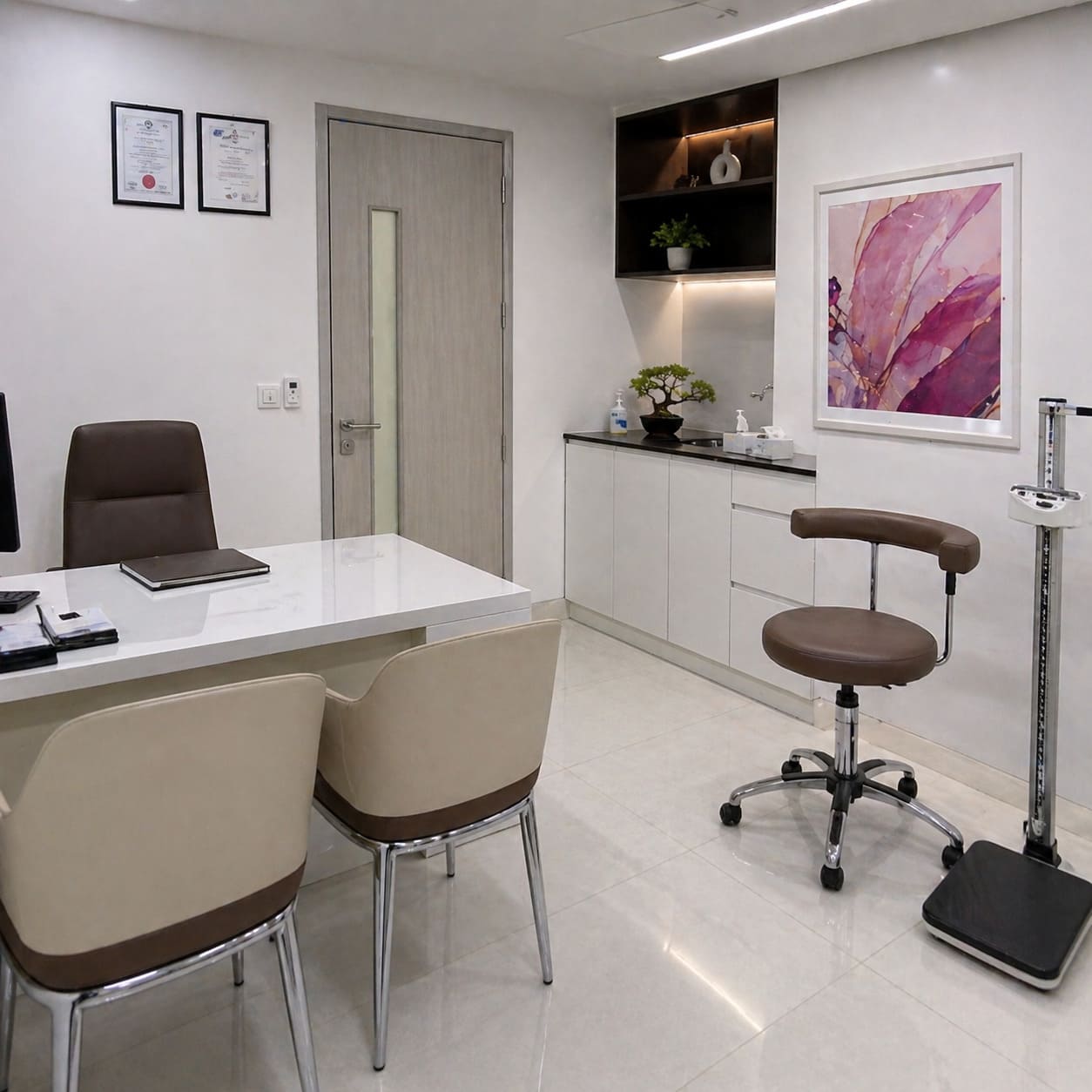
A consultation can reveal several technically possible options, with one pathway that fits best. For breast reconstruction in London, the useful question is not simply whether a surgeon offers a named flap. The better test is whether the consultation brings cancer treatment, timing, donor sites, symmetry and alternatives into one plan.
At D B Ghosh Breast Surgeon Specialist in Cancer and Cosmetic Surgery, we approach this as reconstruction planning within breast cancer care, not as a stand-alone procedure choice. That means discussing the breast operation, possible radiotherapy, donor-site assessment and any need for staged procedures in the same clinical conversation.
Useful questions to ask in clinic include:
- How does my cancer treatment plan affect timing? Ask whether immediate, delayed or staged reconstruction fits your likely treatment sequence.
- Which donor sites are realistic for my body? Previous scars, body shape and available tissue can change the answer.
- What are the implant-based or combined alternatives? A safe plan includes the options you are not choosing as well as the one you prefer.
- How will symmetry be planned? Ask whether surgery to the other breast may be discussed later for balance.
- Who is involved in the cancer care plan? A multidisciplinary team means the breast surgery, radiology, pathology and oncology input is considered together where breast cancer treatment is involved.
Two approaches show up again and again. One starts with a procedure name and tries to make the rest of the plan fit around it. The other starts with the treatment pathway, your anatomy and your recovery capacity, then chooses the reconstruction that fits those facts. The second approach tends to hold up better long-term because it treats the reconstruction as part of cancer care and future body function, not as a label on an operation list.
Expert breast surgery advice from a leading London consultant with over 30 years of experience.
Book ConsultationCommon questions about own tissue breast reconstruction
Can own tissue reconstruction be done after implant reconstruction?
Own tissue reconstruction may be considered after implant reconstruction, especially where revision surgery is being discussed. Suitability depends on your treatment history, donor tissue and the condition of the breast area.
Will I need surgery on the other breast for symmetry?
Symmetry surgery may be discussed, but it is not automatic. The decision depends on breast size, shape, your reconstruction type and your own priorities.
Can I have own tissue reconstruction after radiotherapy?
Own tissue reconstruction can be used after radiotherapy in some cases. Radiotherapy affects planning, so timing, donor-site choice and risk need to be discussed carefully.
Is fat transfer the same as flap reconstruction?
Fat transfer, also called lipomodelling, is different from flap reconstruction. It is usually used after reconstruction to adjust size or shape, or to improve visible rippling from an implant.
Does a DIEP flap affect the stomach muscles?
A DIEP flap uses skin and fat from the lower abdomen, with little or no muscle. Abdominal strength is usually not affected, but your surgeon should discuss donor-site effects in relation to your body and previous surgery.
This is general information, not medical advice.