What is the difference between a breast surgeon, a plastic surgeon, and an oncoplastic surgeon?
A breast surgeon focuses on diagnosis and surgery for breast disease, including cancer and benign breast conditions. A plastic surgeon focuses on reconstruction and cosmetic procedures across many parts of the body, including the breast. An oncoplastic surgeon works at the point where cancer surgery and breast reshaping meet, aiming to remove disease safely while also planning the breast shape as part of the same decision.

Understanding the Difference: Breast, Plastic, and Oncoplastic Surgeons
Titles can sound similar, which is why many people assume these specialists do the same work. They do overlap in some areas, but their training pathways and day-to-day practice are different.
In the UK, doctors are registered with the GMC, and surgical training is structured through recognised pathways linked to bodies such as the Royal College of Surgeons. That background matters because the title often reflects the type of surgery a consultant performs most often.
A simple way to think about it is this:
- A breast surgeon usually deals with breast symptoms, breast cancer surgery, benign breast disease, lymph node assessment, and risk-reducing operations.
- A plastic surgeon usually deals with reconstruction, body contouring, microsurgery, and cosmetic procedures, including breast augmentation or reduction.
- An oncoplastic surgeon usually has breast surgical expertise with additional training in techniques that combine tumour removal and breast reshaping, or works in close partnership with reconstructive teams.
That does not mean one surgeon can never do work associated with another title. In NHS breast units and private practice alike, there is often shared care. A patient with breast cancer may see a breast surgeon first, then have reconstructive discussions with a plastic surgeon, or be treated by an oncoplastic breast surgeon who plans both parts together.
Misunderstandings often start with the word “plastic”. In medicine, plastic surgery refers to reconstruction and restoration, not simply cosmetic treatment. Equally, the term “breast surgeon” does not mean a surgeon only removes lumps. Breast specialists may manage assessment, biopsy planning, cancer surgery, symmetry procedures, and longer-term follow-up.
A woman with a new breast lump generally starts with a breast specialist assessment. Someone considering cosmetic breast enlargement without any breast disease usually sees a plastic surgeon. A patient who needs cancer surgery and also wants to understand reshaping or immediate reconstruction may need an oncoplastic discussion from the outset.
Why the Distinction Matters: Clinical Implications and Patient Outcomes
Choosing the right specialist affects more than the wording on a clinic letter. It can shape the options discussed, the order decisions are made, and the balance between cancer treatment and reconstruction.
Cancer surgery has its own rules. Surgeons must think about tumour removal, margin clearance, lymph node staging, pathology, imaging, and the role of the MDT. NICE guidance and standard NHS breast unit practice place oncological safety at the centre of planning. Appearance matters, but it follows the clinical priorities of safe treatment.
Consider three common situations:
- A patient with a small cancer in a larger breast may be suitable for breast-conserving surgery with reshaping, which means that an oncoplastic approach could widen the available choices.
- A patient needing mastectomy after previous surgery or radiotherapy may need a detailed reconstructive discussion, where plastic surgical input becomes especially relevant.
- A patient with a benign breast concern may not need reconstructive planning at all, and a breast surgeon is usually the right first specialist.
Decision-making also changes according to timing. Immediate reconstruction happens at the same operation as the cancer surgery. Delayed reconstruction happens later, once cancer treatment is complete or once the situation is clearer. Those are different pathways with different trade-offs, and the surgeon leading the discussion needs to be comfortable explaining both.
At D B Ghosh Breast Surgeon Specialist in Cancer and Cosmetic Surgery Harley Street London, this type of distinction sits at the centre of planning because the question is rarely just “what operation can be done?” The better question is “what operation fits the diagnosis, the breast shape, the wider treatment plan, and the patient’s priorities?”
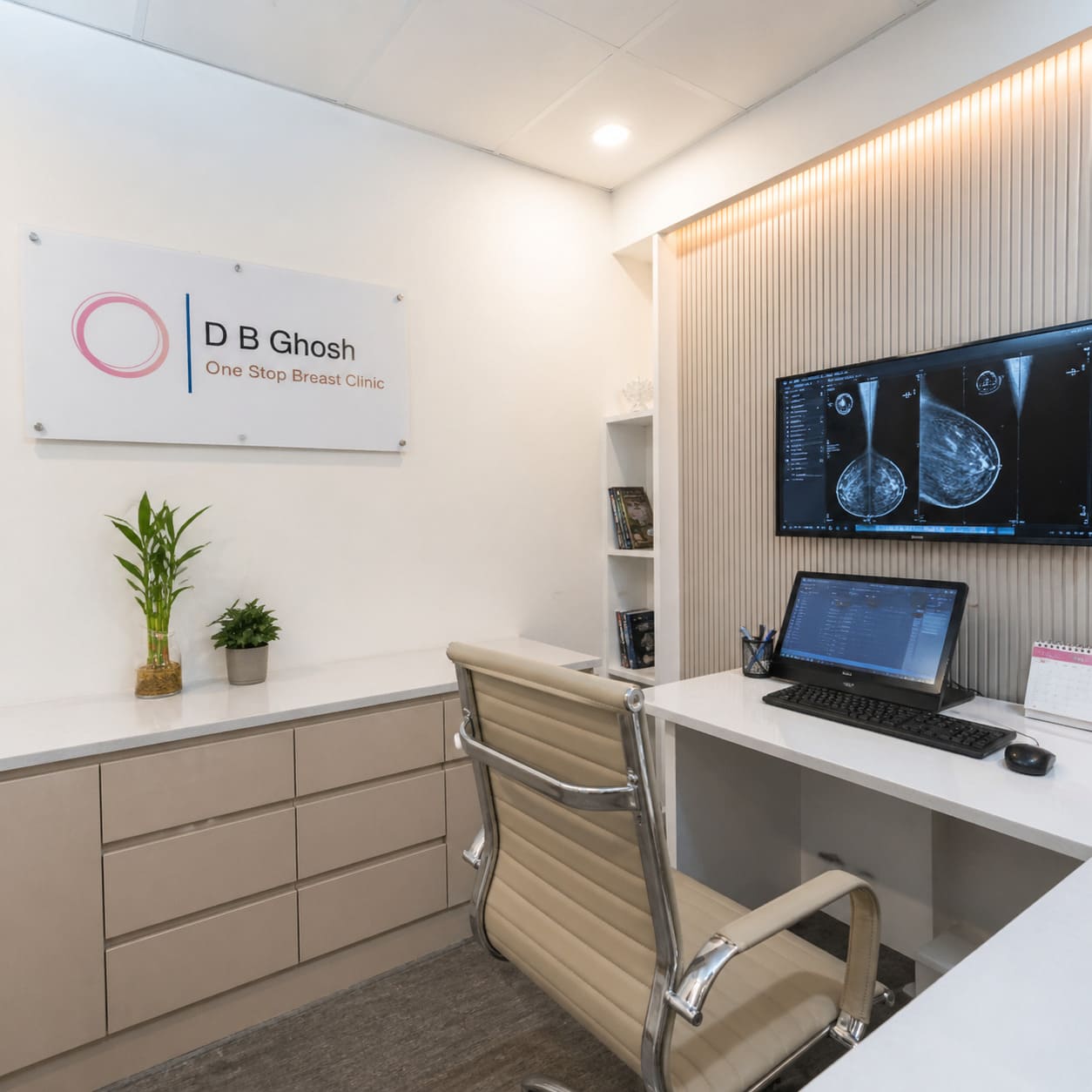
Expert advice on breast cancer treatment, cosmetic breast surgery, and reconstruction options in London.
Book a ConsultationWho Should See Which Specialist? Matching Needs to Expertise
Most people do not need to work this out alone from internet searches. Referral patterns, imaging results, and clinic assessment usually point them in the right direction. Even so, it helps to know the broad map before the first appointment.
If you have a new symptom such as a lump, nipple change, breast pain with a focal concern, skin dimpling, or discharge, a breast clinic is generally the correct starting point. A consultant breast surgeon can assess symptoms, arrange imaging, and decide whether biopsy or follow-up is needed. A One-Stop Breast Clinic is often useful here because examination and imaging can be coordinated in one visit where appropriate.
For benign breast disease, the same principle applies. Cysts, fibroadenomas, breast pain, and other non-cancerous concerns are usually assessed by breast specialists rather than plastic surgeons. If surgery is needed, it is often limited and targeted, with reconstruction playing little or no role.
Cosmetic goals create a different pathway. Someone seeking augmentation, reduction for body proportion, or correction of gynaecomastia without any sign of breast disease would usually see a plastic surgeon or a breast surgeon with an established cosmetic practice, depending on the procedure and the surgeon’s scope of work.
High-risk patients may need a more layered discussion. A strong family history, a known genetic mutation, or previous advice about risk-reducing surgery may lead to conversations about surveillance, mastectomy choices, reconstruction timing, and symmetry planning. In that setting, oncoplastic input can be especially valuable because prevention surgery still raises shape, scarring, and recovery questions.
Second opinions often sit in the middle. Mixed recommendations about margins, mastectomy type, nipple preservation, or reconstruction timing are a common reason to seek another specialist view, especially after prior surgery or complex imaging findings.
Bring your main questions in writing to consultations to help focus discussions and ensure you get the answers you need.

The One-Stop Breast Clinic: What to Expect from Consultant-Led Assessment
A one-stop clinic is a structured way of assessing breast concerns without unnecessary fragmentation. The point is clinical clarity, not speed for its own sake.
In a consultant-led setting, the appointment often begins with a detailed history and examination. The surgeon then decides whether imaging is needed, which may include mammography, ultrasound, or both depending on age, symptoms, and the nature of the concern.
If imaging shows an area that needs further assessment, a biopsy may be arranged on the same day or soon afterwards. This combination of examination, imaging, and tissue sampling is often called triple assessment. Results do not always come back immediately, because pathology takes time, but the overall plan is usually clearer by the end of the visit.
A typical pathway may look like this:
- Clinical history and breast examination.
- Same-visit imaging if indicated.
- Biopsy planning or reassurance, depending on the findings.
- Review of results and discussion of next steps.
- MDT input if cancer or a complex lesion is identified.
Centres such as the Rapid Diagnostic Centre, The London Clinic, and the Royal Free Hospital Breast Unit work within this kind of coordinated model, although the exact sequence depends on the case. Consultant-led assessment matters because it keeps the decision-making anchored to the whole picture rather than splitting it across multiple disconnected appointments.
For a patient, the practical benefit is often that uncertainty narrows more quickly. Even when the final diagnosis takes a little longer, the difference between “something was seen” and “this is the likely pathway from here” can be considerable.
Ask about both immediate and delayed reconstruction options if you are considering surgery for cancer or prevention, as timing can affect your outcomes.

Trade-Offs and Decision Points: Balancing Oncological Safety with Aesthetic Outcomes
Every breast operation carries more than one aim. In cancer care, the first aim is safe treatment. Shape, volume, nipple position, symmetry, and reconstruction still matter, but they are considered within that framework.
Tumour size and tumour location can limit what is sensible. A small cancer away from the nipple may allow breast-conserving surgery with a very good cosmetic result. By contrast, a larger area of disease, multiple tumour sites, or a cancer close to the nipple may make conservation difficult or unsuitable.
Breast size changes the picture as well. In a larger breast, removal of tissue may be combined with reshaping techniques such as therapeutic mammoplasty. In a smaller breast, removing the same volume may produce a more visible defect, which may shift the conversation toward mastectomy, flat closure, or reconstruction.
Reconstruction timing brings another set of choices. Immediate reconstruction may reduce the number of major operations and may preserve more of the breast skin envelope. Delayed reconstruction may be more appropriate if further treatment is likely to affect results, or if the patient wants time before making that decision. Neither route is automatically right.
Symmetry is another area where expectations need care. Operating on one breast can change the shape enough that the opposite side may later need adjustment. Occasionally this is planned from the start. In other cases, it is better considered once healing and any further treatment are complete, especially after radiotherapy.
The oncoplastic mindset is not about choosing appearance over safety. It is about planning both from the beginning, with a clear sense of what can reasonably be achieved in that particular breast, for that diagnosis, at that point in treatment.

Questions to Ask in Clinic: Helping Your Consultation
A good consultation should leave you clearer about the diagnosis, the options, and the reasoning behind the recommendation. Bringing a short list of questions can make that easier, especially if a lot of information is being covered.
- What is the main goal of this operation in my case?
- Is this being planned as cancer surgery, reconstruction, cosmetic surgery, or a combination?
- What alternatives are reasonable for me, including doing the operation at a different time?
- How might this affect breast shape, nipple position, scarring, and symmetry?
- Will my case be discussed in an MDT, and what difference could that make?
- If reconstruction is relevant, what are the immediate and delayed options?
- What are the main risks, including the chance of further surgery?
- How might radiotherapy, previous surgery, or other treatment affect the plan?
- What recovery should I expect in general terms over the first few weeks?
- What information will I receive to review after the appointment?
Some patients also find it useful to ask who will lead each part of care if more than one surgical team is involved. That matters most in combined cancer and reconstruction pathways, where clear roles prevent confusion later in the process.
Expert breast surgery advice from a leading London consultant with over 30 years of experience.
Book ConsultationCommon Misconceptions and Forward-Looking Considerations
One common myth is that a plastic surgeon is always the right choice if appearance matters. In reality, the right surgeon depends on the diagnosis and the operation being planned. For breast cancer, oncological judgement remains central even when reconstruction is part of the same treatment plan.
Another misunderstanding is that oncoplastic surgery means a more cosmetic version of cancer care. It usually means the opposite of simplification. These decisions are often more detailed because they involve tumour clearance, breast shape, radiotherapy impact, and future revision risk all at once.
Some people also assume that every patient should aim for immediate reconstruction. That is not the case. For some, immediate reconstruction is appropriate and welcome. For others, delayed reconstruction, a flat closure, or no reconstruction at all may fit better with the wider treatment picture and personal preference.
Breast surgery is also changing in practical ways. Wire-free localisation may help guide removal of small impalpable lesions. Fluorescence-guided surgery may assist operative planning in selected settings. LYMPHA is a technique intended to reduce the risk of lymphoedema in specific patients having axillary surgery. These developments are worth discussing where relevant, although suitability depends on the clinical situation rather than the appeal of a newer method.
Consultant-led, multidisciplinary care is likely to remain the anchor point, whether treatment happens in the NHS or privately. Titles matter, but the more useful question is whether the surgeon’s expertise matches the problem in front of you and whether the plan makes sense as a whole.