
When is surgery considered necessary for breast cancer?
Surgery is usually recommended when a biopsy confirms a malignant breast tumour, though there are several other reasons it might be advised. These include imaging that suggests abnormality, incomplete response to treatment, inherited risk factors, cancer recurrence or simply personal preference within a supported clinical framework.
Pro Tip: Consider seeking a second opinion when surgery is advised on the basis of unclear imaging or inconclusive biopsy results.

1. A Confirmed Diagnosis of Breast Cancer
Surgery often becomes a key part of treatment once a diagnosis of breast cancer is established. While not every case requires the same approach, the presence of cancerous cells confirmed by a biopsy typically initiates surgical planning.
In early-stage breast cancer, surgery is usually the first step, with the aim of removing the tumour before other therapies are used. In more advanced cases, surgery might follow systemic treatments such as chemotherapy, depending on how the tumour behaves.
Several factors influence the surgical decision:
- Type and grade of tumour
- Tumour size and location
- Lymph node involvement
- Patient’s general health
- Input from the multidisciplinary team (MDT)
Surgery can be curative or part of a broader treatment pathway. In some complex or metastatic cases, surgery may be used to relieve symptoms rather than to eliminate the disease.
Despite common assumptions, surgery is frequently not optional once a cancer diagnosis is confirmed. It serves a central purpose in achieving clear surgical margins and aiding in accurate staging, which guides all further treatment decisions.
2. Imaging or Biopsy Shows a Suspicious Lesion
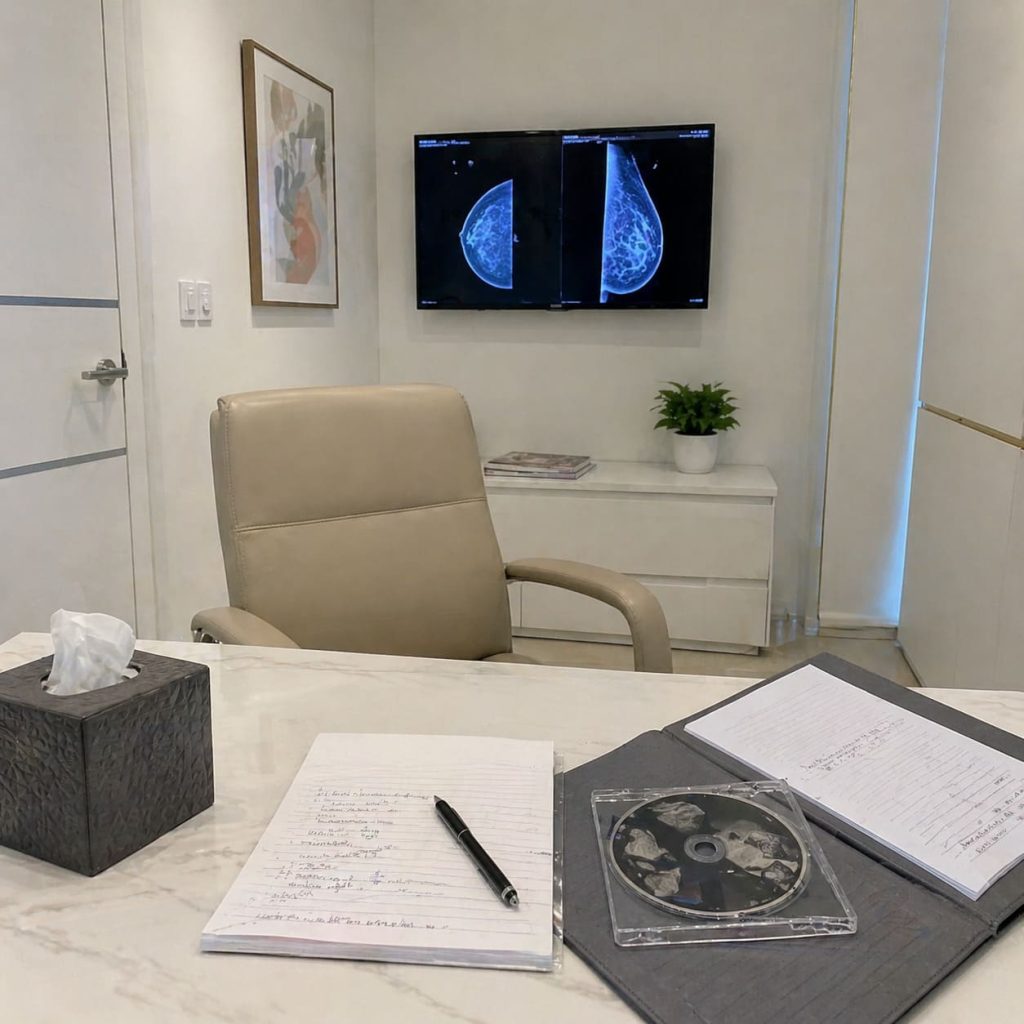
In some cases, abnormal imaging or inconclusive biopsy results lead to a recommendation for surgical excision. This may occur before cancer is confirmed, particularly when a lesion appears suspicious on a mammogram or ultrasound.
Features that may raise concern include:
- Irregular borders
- Unexplained density changes
- Distorted tissue architecture
- High BIRADS score on imaging reports
Excision biopsy involves removing part or all of the lesion for pathological evaluation. While needle or core biopsies provide helpful insight, they can sometimes yield inconclusive findings. Surgery then becomes the clearest route to reach a firm diagnosis.
This does not mean surgery is rushed or presumptive. Instead, it reflects a cautious, clinically supported approach where diagnostic certainty matters. Surgical excision is discussed only after full review by the imaging, pathology and surgical teams.
Book a Surgical Consultation
3. Cancer Has Not Responded to Other Treatments
When breast cancer does not respond adequately to treatments such as chemotherapy or hormone therapy, surgery may be reconsidered as the next appropriate step.
Initial treatment plans often include systemic therapy to shrink the tumour before surgery. The response is closely monitored using repeat imaging, clinical examination and tumour markers.
Surgical reconsideration may occur when:
- Tumour size remains unchanged or increases
- Imaging suggests continued local progression
- Disease features indicate resistance to medications
In these situations, surgery becomes a clinical adaptation rather than a fallback. The aim is to contain the disease more effectively when non-surgical measures have not achieved the hoped-for outcomes.
This recalibration does not imply failure. It reflects customised decision-making in response to how the tumour behaves over time, often guided by regular review within the MDT.
4. Presence of High-Risk Genetic or Family History Factors
For patients with inherited genetic mutations or strong family histories of breast cancer, risk-reducing surgery may be recommended even in the absence of current disease.
BRCA1 and BRCA2 mutations are the most recognised markers, though others may also present increased risk. Preventative mastectomy is one option offered to those with significantly raised lifetime risk.
Surgery may be considered when:
- A known high-risk gene mutation is identified
- Multiple close relatives have had breast or ovarian cancer
- Lifetime cancer risk exceeds accepted thresholds
- The patient has a personal history of atypical cell changes
Genetic counselling plays a central role in guiding this decision. Emotional, psychological and lifestyle considerations are weighed alongside medical risk. Surgery, in this context, is a highly personal and often difficult choice, but one that can provide peace of mind for some.
Pro Tip: If you carry a BRCA mutation, consult both clinical and psychological experts to weigh the benefits of preventative surgery.
5. Recurrence After Previous Breast Cancer Treatment
For patients who have undergone previous breast cancer treatment, the development of a new lump or abnormalities in imaging may indicate a recurrence. In such cases, surgery may once again become necessary.
There is an important distinction between:
- Local recurrence in the same breast
- A completely new cancer in the opposite breast
Both situations require careful clinical assessment. Previous surgeries, existing scar tissue and prior treatment history all influence what surgical options are available the second time around.
Reoperation considerations typically include:
- Feasibility of further breast-conserving surgery
- Suitability of mastectomy or reconstruction
- Risks associated with altered anatomy
- Emotional impact and readiness for further treatment
The decision is rarely straightforward, but advances in reconstructive planning and multidisciplinary input allow for more informed, compassionate care.
6. Large or Quickly Growing Breast Lump
Size and speed of growth can sometimes shift the clinical urgency toward surgery, even before a diagnosis is fully confirmed.
While many breast lumps prove to be benign, others demonstrate characteristics that suggest a higher likelihood of malignancy. Prompt removal may be advised in cases where:
- The lump is unusually large relative to the patient’s breast size
- Growth has occurred over a short period
- Physical changes are visible on the skin or nipple
- Symptoms such as discomfort or tightness develop
In such scenarios, surgery serves dual purposes. It removes the lesion and enables a full histological examination. While not every large or fast-growing lump is cancerous, observation alone may not be suitable if the clinical picture raises significant concern.
Genetic Risk Assessment Available
7. Patient Choice After Informed Discussion
Some patients elect to have surgery based on personal values or lifestyle preferences, even when breast-conserving treatment is clinically suitable.
Common reasons include:
- Desire to avoid radiation therapy
- Preference for bilateral mastectomy in one-sided cancer
- Anxiety about recurrence
- Wish for control over treatment direction
A consultant-led discussion ensures that the decision is supported by full understanding of risks, benefits and alternatives. The role of second opinions can be helpful in strengthening patient confidence during such deliberations.
Shared decision-making remains central throughout. Surgery, when chosen this way, reflects the patient’s autonomy and comfort with the path ahead, supported by full clinical insight.
D B Ghosh Breast Surgeon Specialist in Cancer and Cosmetic Surgery Harley Street London
Patients seeking assessment or clarity around any of these indications can request consultation at the Rapid Diagnostic Centre, 146 Harley St, London W1G 7LD, by calling 020 7205 2281. All care is provided within a consultant-led model, with integrated diagnostics and multidisciplinary planning.