Why do breasts often look and feel different after weight loss?
Breasts often change after weight loss because they contain varying amounts of fat, glandular tissue, and skin. If a breast has a higher proportion of fatty tissue, weight loss may reduce volume more noticeably. Skin elasticity, age, previous pregnancies, and genetics also affect whether the breast keeps its shape or develops looseness, drooping, or asymmetry.
Why Breast Shape and Volume Change After Weight Loss
Many people expect their clothes size to change with weight loss, but breast changes can still come as a surprise. The reason is simple: breasts are not made of muscle, and they do not change in a uniform way.
Breast anatomy includes glandular tissue, adipose tissue, supporting ligaments, skin, and the nipple-areola complex. Weight loss mainly affects the fat component. If a person naturally has breasts with more fatty tissue, breast volume loss may be more obvious. If glandular tissue makes up more of the breast, size may change less, although shape can still alter.
A few patterns are especially common:
- volume loss, with a flatter or less full upper breast
- ptosis, which means that the breast sits lower on the chest
- skin redundancy, where the skin envelope feels looser than the tissue inside it
- asymmetry, where one side changes more than the other
Skin elasticity also matters. Younger skin may recoil better, but elasticity varies widely and does not depend on age alone. Pregnancy, breastfeeding, previous weight fluctuations, and family tendency all play a part.
Some people assume they can control breast size through targeted exercise or “spot reduction”. That is a myth. Exercise may strengthen the chest muscles underneath the breast, but it does not selectively preserve breast fat. In the same way, no particular diet can direct fat loss away from the breasts.
Another point often missed is the difference between tissue loss and skin laxity. Tissue loss means there is less volume within the breast. Skin laxity means the outer covering has more slack. A person may have one, the other, or both. That distinction matters later if surgery is being considered, because a breast lift addresses different issues from augmentation or reduction.
When to Seek a Clinical Assessment
If the change seems to fit with recent weight loss, it may be entirely expected. Certain symptoms still deserve proper review, particularly if they are new, persistent, or clearly out of keeping with the rest of the body.
Seek a breast assessment after weight loss if you notice:
- a new lump or thickened area
- nipple changes, including inversion that is new for you
- skin dimpling, puckering, or redness that does not settle
- discharge from the nipple, especially if bloodstained
- one breast changing quickly in size or shape without a clear reason
- persistent pain in one localised area
Breast sagging, softer tissue, and reduced fullness are common after weight loss. Those features on their own do not usually point to serious disease. Even so, concern is a reasonable reason to seek advice, particularly if you are unsure whether a change is part of fat loss or something separate.
A one-stop breast clinic can be useful because examination and breast imaging are coordinated in the same pathway. Depending on age, symptoms, and findings, that may involve ultrasound, mammogram, or biopsy planning. At centres such as the Rapid Diagnostic Centre, the value lies in reducing uncertainty through organised assessment, not in speed for its own sake.
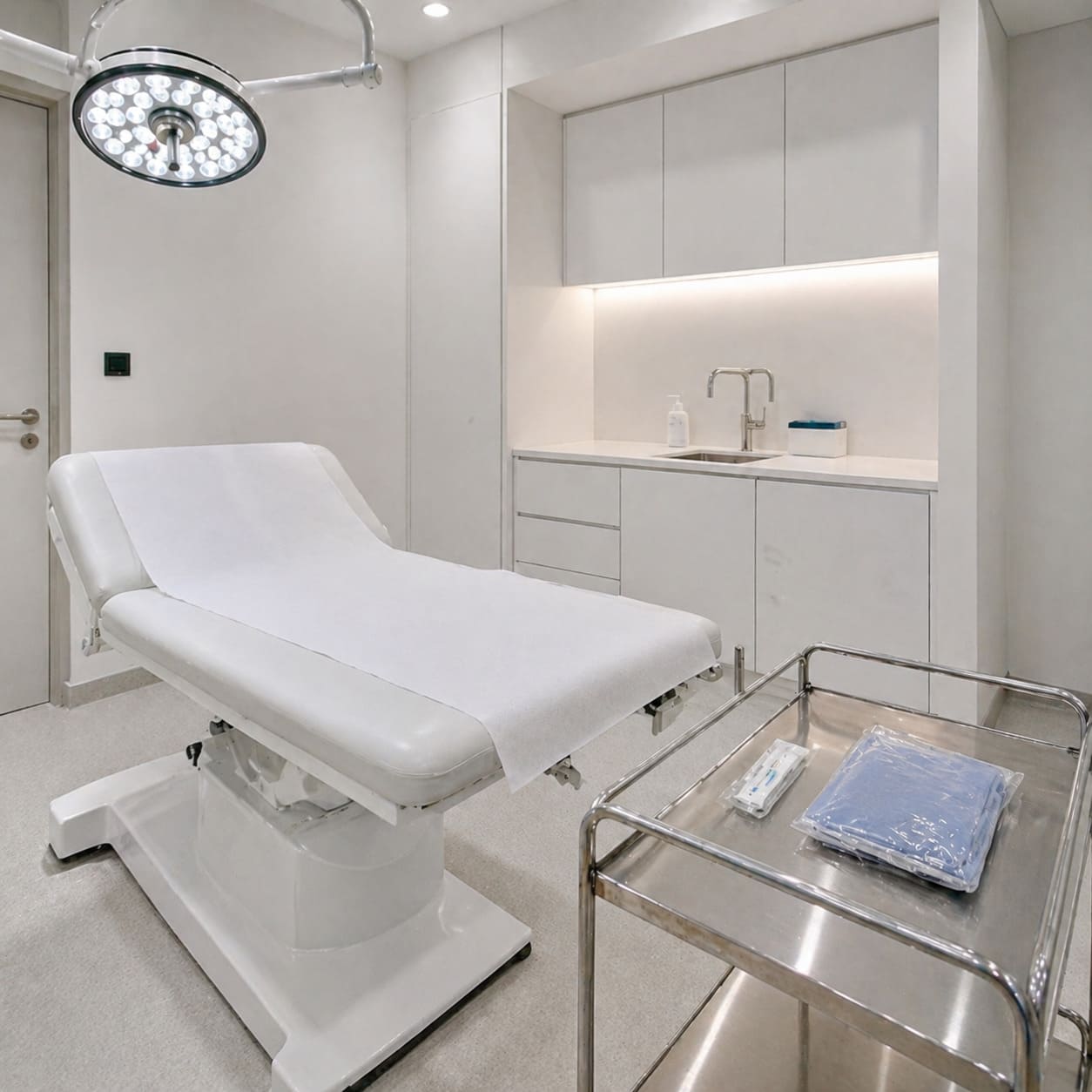
Expert advice on breast cancer treatment, cosmetic breast surgery, and reconstruction options in London.
Book a ConsultationOptions for Addressing Breast Changes Post-Weight Loss
Once weight has stabilised, some people consider whether any treatment is needed at all. Others want to understand breast reshaping options because the breast no longer matches their frame, comfort, or expectations.
Non-surgical measures have limits. A well-fitted bra can improve support and silhouette. Strength training may improve posture and chest wall tone. Skincare may help with comfort if there is rubbing beneath the breast. None of these approaches can restore lost breast volume, remove excess skin, or reposition the nipple.
Surgical options depend on the actual problem being treated.
Mastopexy
A mastopexy, often called a breast lift, reshapes the breast and moves the nipple to a higher position if needed. It does not create substantial new volume on its own. It is generally considered when looseness and droop are the main issues.
Augmentation
Augmentation increases volume, usually with implants and in some cases with fat transfer. It may suit someone whose main concern is loss of fullness, especially in the upper part of the breast. Implant choice, tissue thickness, and skin quality all influence whether this is sensible.
Mastopexy with augmentation
Some people have both volume loss and excess skin. In that setting, a lift and augmentation may be discussed together or staged separately. The safest plan depends on tissue quality, the size of change sought, and how much surgery the breast can tolerate in one operation.
Reduction or reshaping
Weight loss does not always leave breasts smaller. Some breasts remain relatively heavy, droopy, or uncomfortable even after significant body weight change. Reduction or reshaping may be more relevant in that group, especially if there is neck, shoulder, or skin fold discomfort.
Prior surgery, breast cancer treatment, strong family history, or high-risk genetics can shift the discussion. Oncoplastic priorities focus first on oncological safety and breast health, with shape considered within those limits. Cosmetic planning and reconstructive planning may overlap, but they are not the same conversation. A consultant breast surgeon with an oncoplastic background will usually look at skin quality, volume, symmetry, scars, cancer risk, and future screening before commenting on what is realistic. That is the sort of measured planning associated with practices such as D B Ghosh Breast Surgeon Specialist in Cancer and Cosmetic Surgery Harley Street London.
Ask for a written summary during your consultation to help clarify surgical plans and expectations.

What to Expect During a Consultation
A consultation should clarify the problem before anyone talks seriously about surgery. Some people attend expecting a procedure to be chosen on the day, but the first aim is to work out what has changed, whether it is clinically straightforward, and what options genuinely fit.
A typical breast surgery consultation often includes:
- A clinical history, including weight change, pregnancies, previous breast procedures, symptoms, family history, and general health.
- An examination to assess breast volume, skin elasticity, nipple position, asymmetry, scars, and any concerning features.
- Imaging review, or new imaging if symptoms or age make that appropriate, such as ultrasound or mammogram.
- A discussion of possible approaches, including doing nothing, waiting for weight stability, or considering surgery.
- Review of benefits, limitations, scars, risks, recovery, and whether more than one operation might be needed.
Preparation can make the appointment more useful. Bringing a clear timeline of weight loss, a note of current medications, details of prior imaging, and a short list of priorities often helps. Some people focus on cup size, while others are more concerned about shape, bra fit, exercise comfort, or asymmetry. Those priorities can lead to different recommendations.
In consultant-led care, decision-making is based on examination, imaging where required, and a balanced discussion of alternatives. Surgery is not always the answer, and sometimes the most sensible plan is to wait until weight has been stable for a period and the breast has settled into its new baseline.
Consider waiting until your weight has been stable for several months before proceeding with any breast surgery to optimise results.

Risks, Trade-Offs, and Common Misconceptions
Any procedure on the breast involves trade-offs. Royal College of Surgeons consent standards and NHS information both reflect the same principle: good decisions depend on a clear view of benefits, limitations, and uncertainty.
General surgical risks may include bleeding, infection, wound healing problems, scarring, asymmetry, changes in nipple sensation, and the possibility of revision surgery. The pattern and likelihood vary by operation, smoking status, medical history, skin quality, and previous surgery. Larger changes usually involve more visible scars and a more complex recovery than smaller adjustments.
Shape, volume, and sensation do not move in lockstep. A lift may improve breast position but cannot guarantee upper fullness. Augmentation may restore volume but does not correct every form of skin laxity. Reduction can relieve heaviness, yet it also changes breast shape permanently and leaves scars in predictable locations.
Further weight change matters as well. If weight continues to fall, the breast can lose more volume after surgery. If weight rises again, size and skin stretch may alter the result. Stability before an operation is therefore more than a cosmetic preference. It affects planning and the durability of any outcome.
Misconceptions are common. One is the idea that surgery creates a permanent endpoint. Breast tissue still ages, skin still changes, and the body does not stop responding to hormones or weight fluctuations. Another is the belief that before-and-after photographs can predict an individual result. Images can show what is possible in one person with one starting point, but they do not substitute for anatomy, examination, or judgement in clinic.
Sometimes surgery is simply not appropriate at that moment. Unstable weight, untreated medical problems, unrealistic expectations, or unexplained breast symptoms may all be reasons to pause. Waiting can be a valid clinical decision, especially where the breast is still changing.
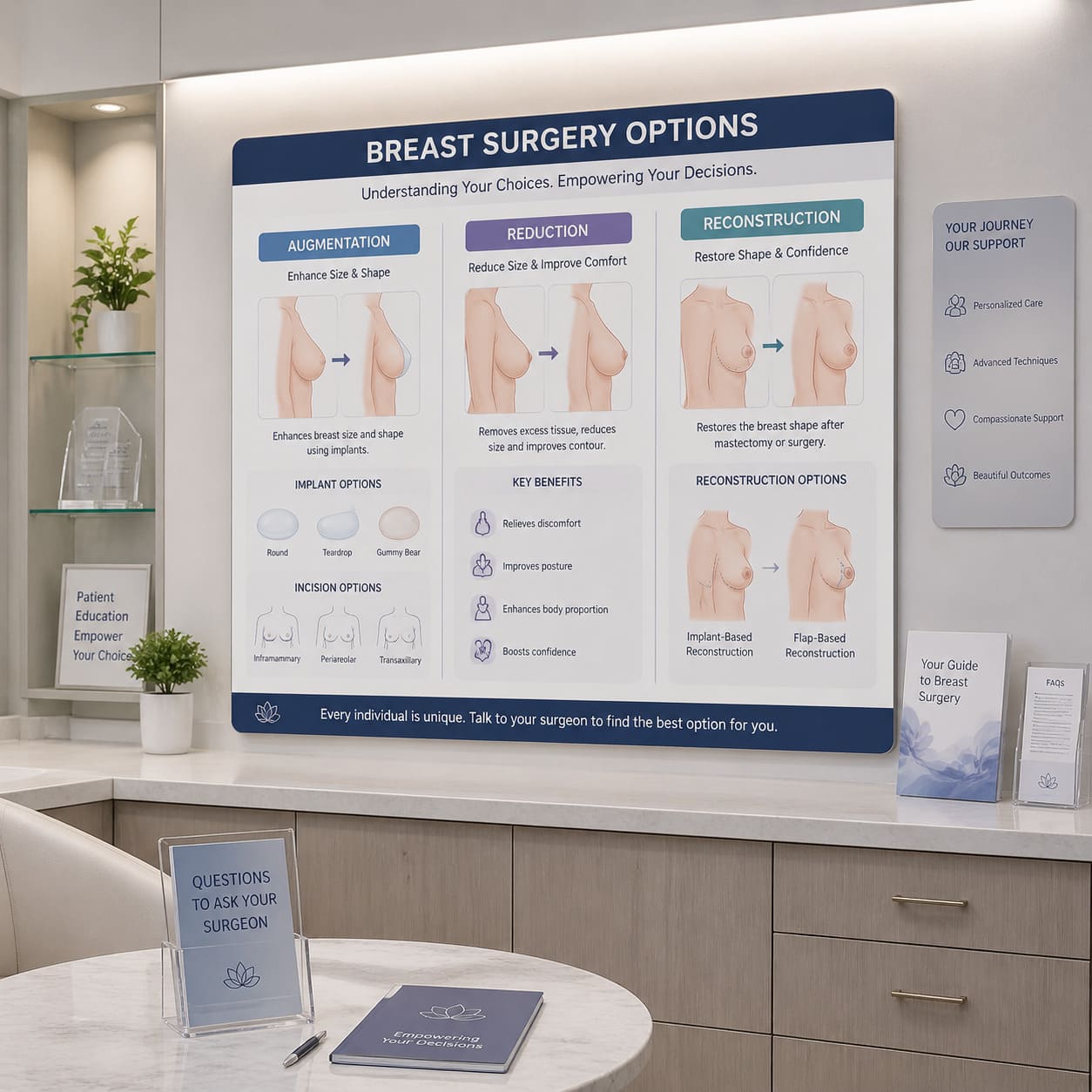
Questions to Ask Your Surgeon Before Deciding
A useful consultation is a two-way discussion. The best questions are the ones that help you understand your own options, not a script recited for the sake of it.
- What exactly has changed in my breasts: volume, skin, nipple position, or a combination?
- Do I need any imaging or assessment before thinking about surgery?
- Am I a candidate for a lift, augmentation, reduction, or no procedure at present?
- If surgery is possible, what scars and recovery should I realistically expect?
- How might future weight changes affect the result?
- Could sensation, breastfeeding potential, or future screening be affected?
- Would you advise doing one procedure, a combined procedure, or staging treatment?
- Are there reasons to wait before deciding?
- In my case, would a second opinion or multidisciplinary input be sensible?
Some people also find it helpful to explain what matters most to them in ordinary language. “I want better support in clothes” is more useful than trying to ask for a named operation. “I am worried about asymmetry after previous surgery” gives a clearer starting point than focusing on cup size alone.
Where recommendations differ between clinicians, that does not automatically mean one is wrong. Breast surgery often involves judgement calls based on tissue quality, risk, and what trade-offs a patient finds acceptable.
Expert breast surgery advice from a leading London consultant with over 30 years of experience.
Book ConsultationLooking Ahead to What Many Don’t Realise About Breast Changes After Weight Loss
The part many people miss is how individual these changes are. Two people can lose a similar amount of weight and end up with very different breast shape, skin behaviour, and symmetry.
Before-and-after images can flatten that reality. They rarely show how stable the weight was, what the starting anatomy looked like, whether previous pregnancies changed the breast, or how long the result has settled. A breast that appears straightforward in a photograph may have involved detailed planning, compromise, or more than one stage.
Weight stability often matters more than people expect. A body that is still changing can make any early decision feel less certain a few months later. Time can clarify whether the main issue is true volume loss, loose skin, or simply an unfamiliar shape after a major change in body composition.
Personal priorities can shift too. At first, appearance may dominate the conversation. Later, comfort in clothing, ease of exercise, scar placement, long-term maintenance, or future breast screening may become more important. A good decision leaves room for those practical realities.
The most useful approach is usually the least hurried one: understand the anatomy, rule out anything that needs clinical attention, and judge options against a stable baseline. That kind of patience often leads to better choices than booking the first procedure that seems to match the mirror.